How to Refactor Legacy Codebases Using AI Assistance Safely
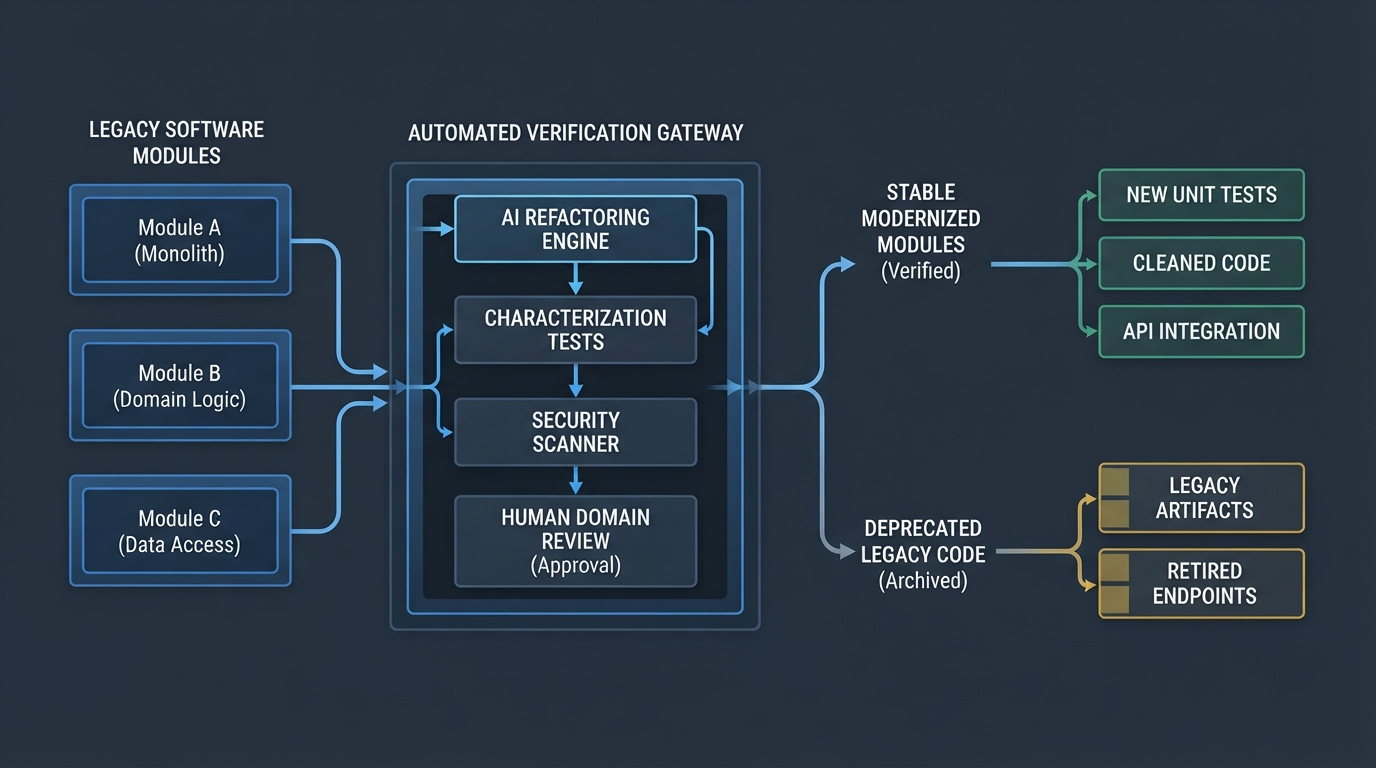
Why is refactoring legacy code with artificial intelligence risky?
Legacy software systems often house decades of undocumented business logic, historical bug workarounds, and uncataloged dependencies that keep enterprise operations running smoothly. When development teams attempt to refactor legacy codebases directly with modern machine learning tools, they inevitably encounter brittle routines that break without warning. Preserving the stability of transactional platforms requires accepting that underlying source code must remain stable before applying synthetic code suggestions. Without strict isolation, probabilistic model suggestions can silently invalidate critical business assumptions.
Academic research evaluating legacy software architecture recovery demonstrates that context window limits and architectural drift restrict an artificial intelligence model capability to comprehend massive monolithic codebases independently. Trying to feed entire legacy code repositories into a language model to automatically generate system patches or application programming interface connectors routinely results in hallucinations and incorrect assumptions regarding system dependencies. Preserving isolation protects engineering teams against these structural oversights while maintaining baseline system reliability across deployment cycles.
Furthermore, engineering managers should consult foundational industry resources on SnapKodex home to benchmark operational engineering methodologies against contemporary standards. Treating legacy code as a sensitive foundation prevents unintentional regressions during major architectural modernizations. Deterministic transactional backends were never designed to accept unverified synthetic outputs, meaning teams must establish systematic defensive barriers around legacy routines.
- Deterministic legacy schemas frequently conflict with probabilistic language model outputs during automated updates.
- Comprehensive big-bang migrations often incur severe budget overruns and unexpected operational failures.
- Undocumented business invariants break easily when developers alter core modules without proper behavioral baselines.
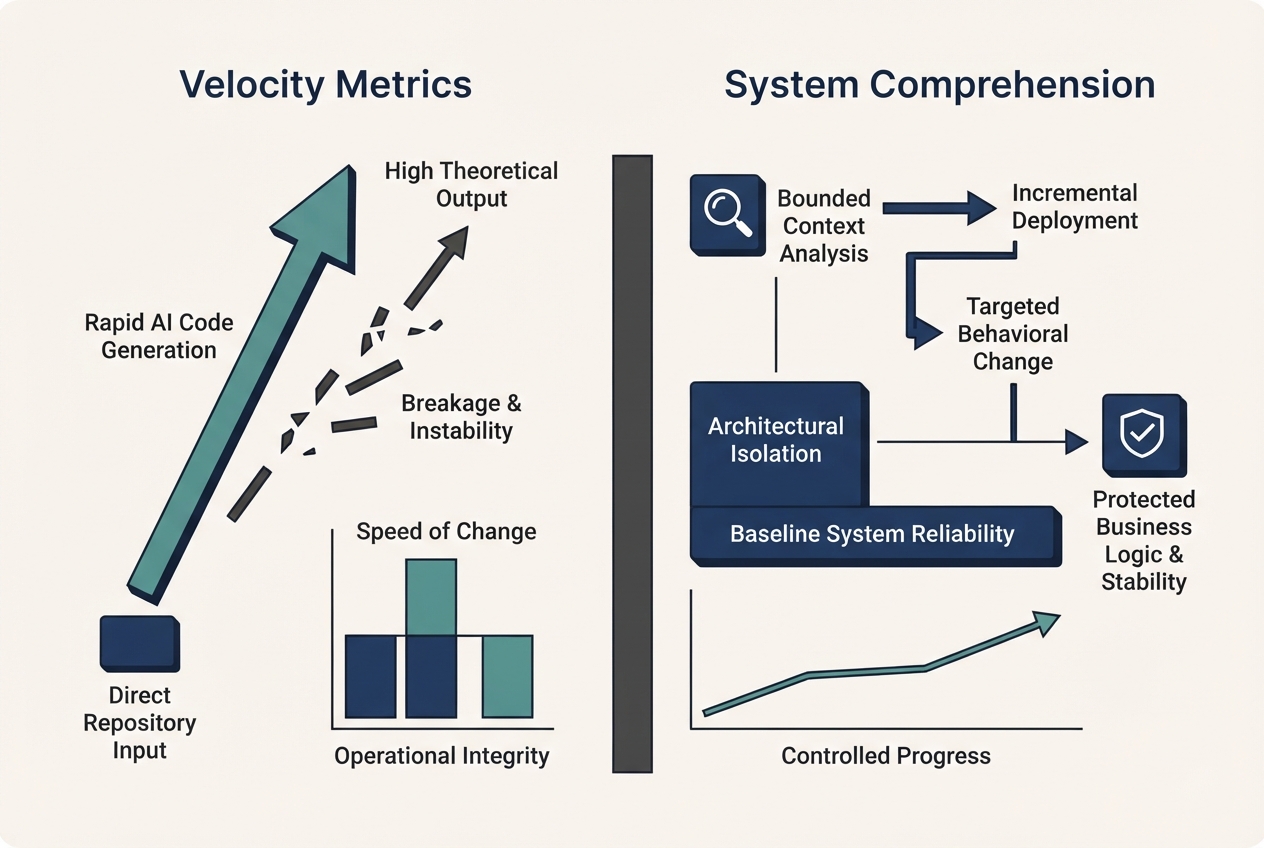
The speed versus comprehension trade-off
A notable brownfield software development study points to a concerning behavioral metric among software engineers. Developers utilizing artificial intelligence assistants on legacy code finished refactoring tasks faster and passed more tests, but exhibited no measurable comprehension gain across evaluated cohorts. In fact, larger speed gains tracked directly with worse overall system understanding among participating engineers. This introduces structural uncertainty for engineering leaders because while velocity spikes in the short term, long-term codebase ownership risks degrading when teams merge changes without understanding the underlying mechanics.
To counteract this risk, engineering managers must enforce strict documentation and walkthrough standards during reviews. Teams should never accept automated refactors unless the author can thoroughly explain every altered function and boundary condition. Technical leadership can review specialized methodologies through SnapKodex services to structure development workflows that prioritize lasting code comprehension alongside delivery speed.
Handling undocumented business logic and architectural drift
Core enterprise systems frequently rely on nuanced workarounds that were added to resolve edge-case platform bugs years earlier. When developers instruct language models to optimize these sections, the tools frequently simplify or remove these checks because the code appears redundant or non-standard to generalized training data. Removing these defensive checks can trigger silent failures in downstream reporting, billing calculations, or database transactions.
Architectural drift also occurs when an automated assistant introduces modern programming abstractions that conflict with existing framework patterns. Rather than modernizing the codebase uniformly, piecemeal suggestions often introduce fragmented design patterns, duplicate dependencies, and inconsistent error-handling strategies. Maintaining strict architectural governance ensures that all suggested revisions align with verified design standards before code enters integration branches.
What is the four-step framework for safe AI code refactoring?
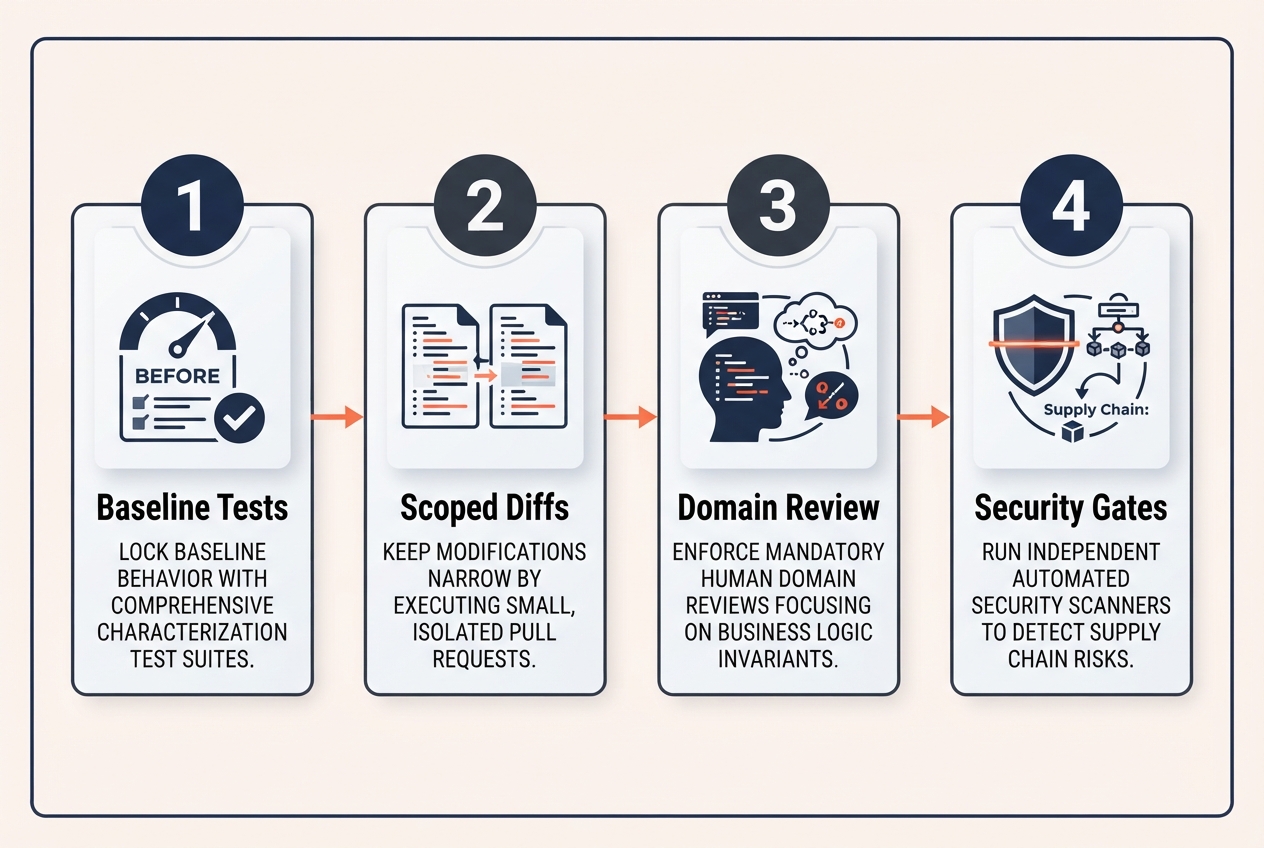
Implementing generative artificial intelligence tools within legacy environments requires structured guardrails. Industry playbooks recommend a disciplined four-step safety methodology designed to mitigate hallucinations, syntax drift, and unexpected security vulnerabilities. By enforcing strict operational controls at each stage of the modernization lifecycle, engineering organizations can harness the speed of machine learning models without compromising production stability or data integrity.
Rather than treating automated coding tools as autonomous developers, teams must deploy them as constrained drafting assistants. Every generated modification must flow through structured verification checkpoints where human domain knowledge and automated tests validate the work before deployment.
- Lock baseline behavior with comprehensive characterization test suites before altering any source files.
- Keep modifications narrow by executing small, isolated pull requests that touch single functions.
- Enforce mandatory human domain reviews focusing on business logic invariants and error-handling routines.
- Run independent automated security scanners to detect supply chain risks and silent vulnerabilities.
Locking behavior with characterization tests first
The foundational principle of working with legacy software dictates that legacy code is simply code without tests. Never allow an artificial intelligence assistant to refactor code until a comprehensive baseline test suite captures current inputs and outputs accurately. If automated tests are completely missing, teams should utilize specialized models to draft characterization or behavior-driven test suites before altering production files.
Characterization tests record the actual operational behavior of existing software regardless of whether that behavior conforms to original documentation. This critical baseline ensures that any unintended behavioral changes introduced during synthetic code generation are flagged immediately by continuous integration runners before reaching staging environments.
Executing tiny pull requests with strict scope limits
Broad architectural overhauls generated by artificial intelligence tools frequently fail because they introduce too many interrelated variables simultaneously. Safe refactoring demands small, granular pull requests that address a single responsibility, such as extracting a helper function or modernizing an interface signature. Limiting pull request scope allows human reviewers to verify every abstract syntax tree change thoroughly.
Small diffs also simplify regression isolation if an unexpected production error occurs post-release. Teams can quickly bisect repository commits to find the exact pull request responsible for an anomaly, significantly decreasing mean time to recovery and preventing disruptive rolling outages.
How do autonomous agents differ from controlled diff workflows?
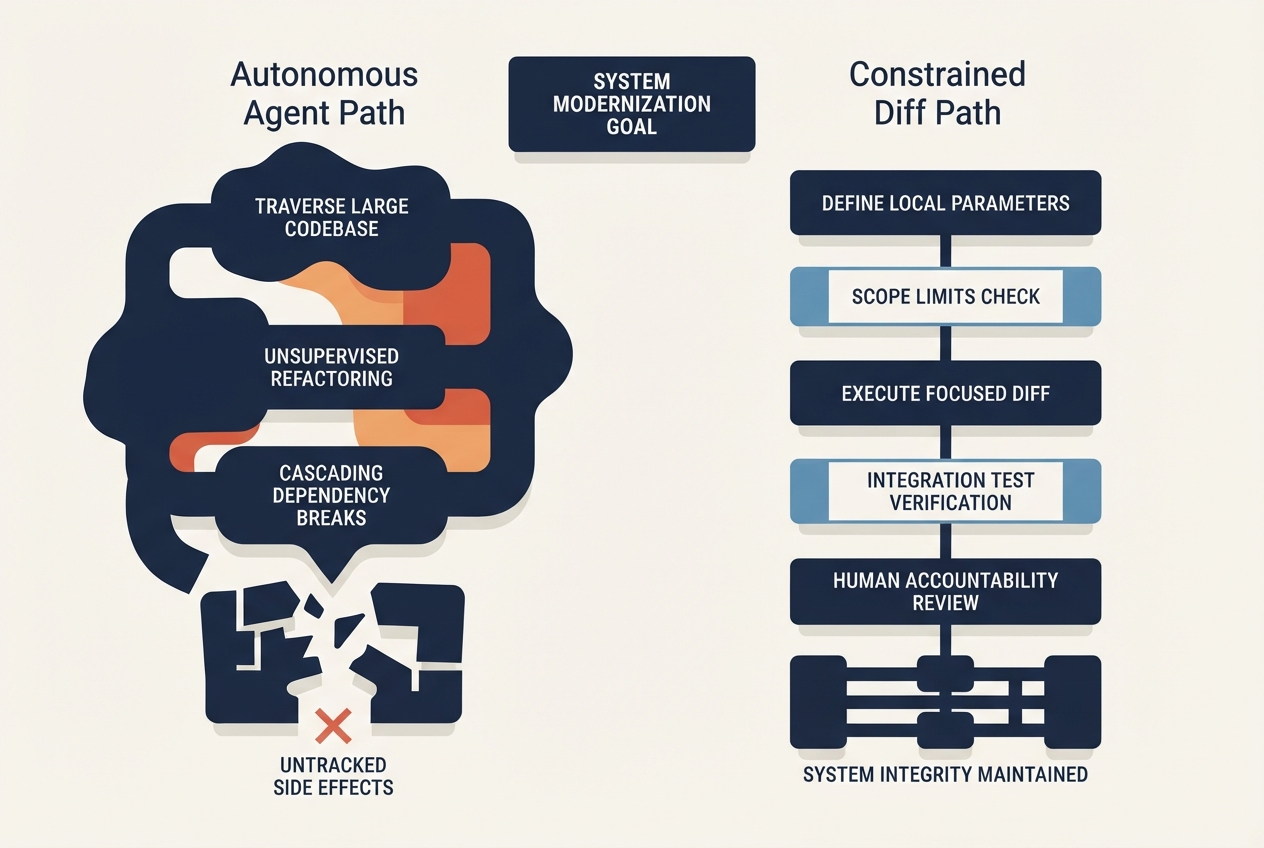
Some vendor marketing promotes fully autonomous artificial intelligence agents capable of traversing large codebases and executing systemic modernization without human supervision. However, rigorous engineering analyses contradict this approach, advocating strictly for constrained, human-guided diff workflows where models operate purely under explicit local parameters. Autonomous agents often attempt wide-ranging changes that exceed their contextual comprehension, leading to cascading dependency breaks.
In a controlled diff workflow, human engineers determine the precise boundaries of each refactoring task. The artificial intelligence tool receives only the immediate function, its direct interfaces, and related test files within its context window. This focused scope minimizes speculative code generation and keeps the human developer accountable for all architectural transitions.
- Autonomous agents frequently introduce untracked side effects across deeply coupled monolithic modules.
- Constrained workflows keep human engineers accountable for architectural design and dependency management.
- Sandboxed environments prevent automated scripts from issuing unauthorized terminal or database commands.
Preventing hallucinated dependencies through constrained models
A frequent failure pattern in automated refactoring occurs when models invent non-existent library methods or introduce obsolete packages to solve modern problems. When granted unconstrained repository access, models can easily hallucinate package names or suggest dependencies with severe vulnerabilities. Constrained workflows prevent this by forcing the model to operate within pinned dependency manifests and strict build configurations.
Engineering teams can review detailed integration blueprints via https://snapkodex.com/services/seo-content and explore workflow structuring resources to standardize internal engineering documentation. Clear configuration boundaries prevent models from altering global package manifests without explicit human approval.
How can engineering teams maintain continuous security and verification?
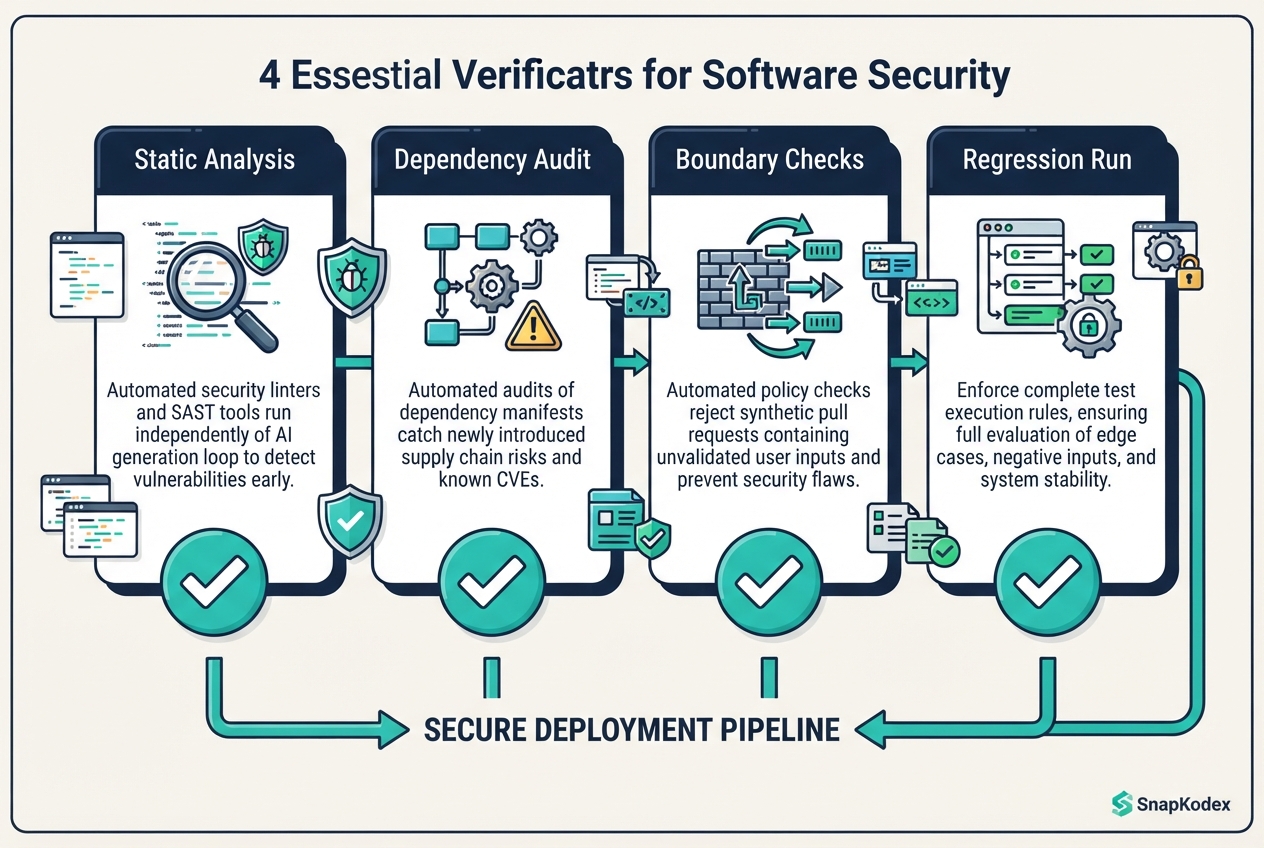
Empirical software security studies indicate that developers using artificial intelligence code assistants frequently write less secure code while exhibiting higher confidence in its safety. To counter this cognitive bias, automated security linters, static application security testing, and dependency vulnerability scanners must run completely independently of the model generation loop.
Engineering leaders should implement automated policy checks that reject synthetic pull requests containing known Common Vulnerabilities and Exposures or unvalidated user inputs. Contact SnapKodex to discuss engineering quality frameworks and explore how structured review gates preserve long-term software maintainability across complex enterprise systems.
Continuous retrospective reviews enable development organizations to analyze post-release bug rates and track recurring patterns in synthetic code suggestions. Updating prompt guidelines and static analysis rules ensures that teams continuously adapt their defensive practices as generative coding tools evolve.
- Track post-release bug frequency and code churn metrics specifically across AI-assisted repositories.
- Perform automated audits of dependency manifests to catch newly introduced supply chain risks immediately.
- Conduct recurring retrospective audits of prompt templates and context configurations to prevent repeat errors.
- Enforce complete test execution rules ensuring automated suites evaluate edge cases and negative inputs.
Traditional versus AI-Augmented Refactoring Controls
A technical comparison outlining how standard software engineering controls must adapt when integrating AI-assisted code generation into legacy environments.
| Control Dimension | Traditional Software Practice | AI-Augmented SDLC Requirement |
|---|---|---|
| Code Generation | Incremental manual changes authored and inspected by engineers over several days. | High-velocity synthetic diffs requiring strict automated isolation and bounded scopes. |
| Vulnerability Detection | Episodic manual code reviews and scheduled quarterly penetration tests. | Continuous automated static application security testing on every generated pull request. |
| Business Logic Validation | Reliance on tacit institutional knowledge retained by long-tenured developers. | Explicit characterization test suites and mandatory domain-focused human approval gates. |
| Dependency Management | Manual dependency upgrades with human vetting of package documentation. | Pinned dependency manifests and automated scanners to catch hallucinated libraries. |
Frequently asked questions
Can artificial intelligence tools safely refactor an entire monolithic codebase at once?
No. Academic studies and engineering analyses demonstrate that context window constraints, architectural drift, and probabilistic hallucinations make unconstrained repository refactoring dangerous. Teams should modernize codebases incrementally using small, isolated pull requests.
Why are characterization tests necessary before refactoring legacy software?
Legacy software frequently lacks written specifications and formal test coverage. Characterization tests record actual runtime behavior across diverse inputs, providing a deterministic verification net that alerts engineers if an automated code tool alters core logic.
How does the speed-versus-comprehension trade-off impact engineering teams?
Research shows developers using AI tools finish legacy refactoring tasks faster but often fail to comprehend the underlying architectural changes. This dynamic can erode long-term code ownership unless teams enforce thorough code walkthroughs and documentation requirements.
Why do AI-assisted development workflows require independent security scanners?
Empirical studies reveal that developers using code generation tools tend to feel overconfident about code quality despite introducing subtle security flaws. Independent automated security scanners ensure synthetic code is rigorously vetted without human bias.