How to Design a Resilient Multi-Tenant SaaS Architecture
What Are the Core Tenant Isolation Models in SaaS?
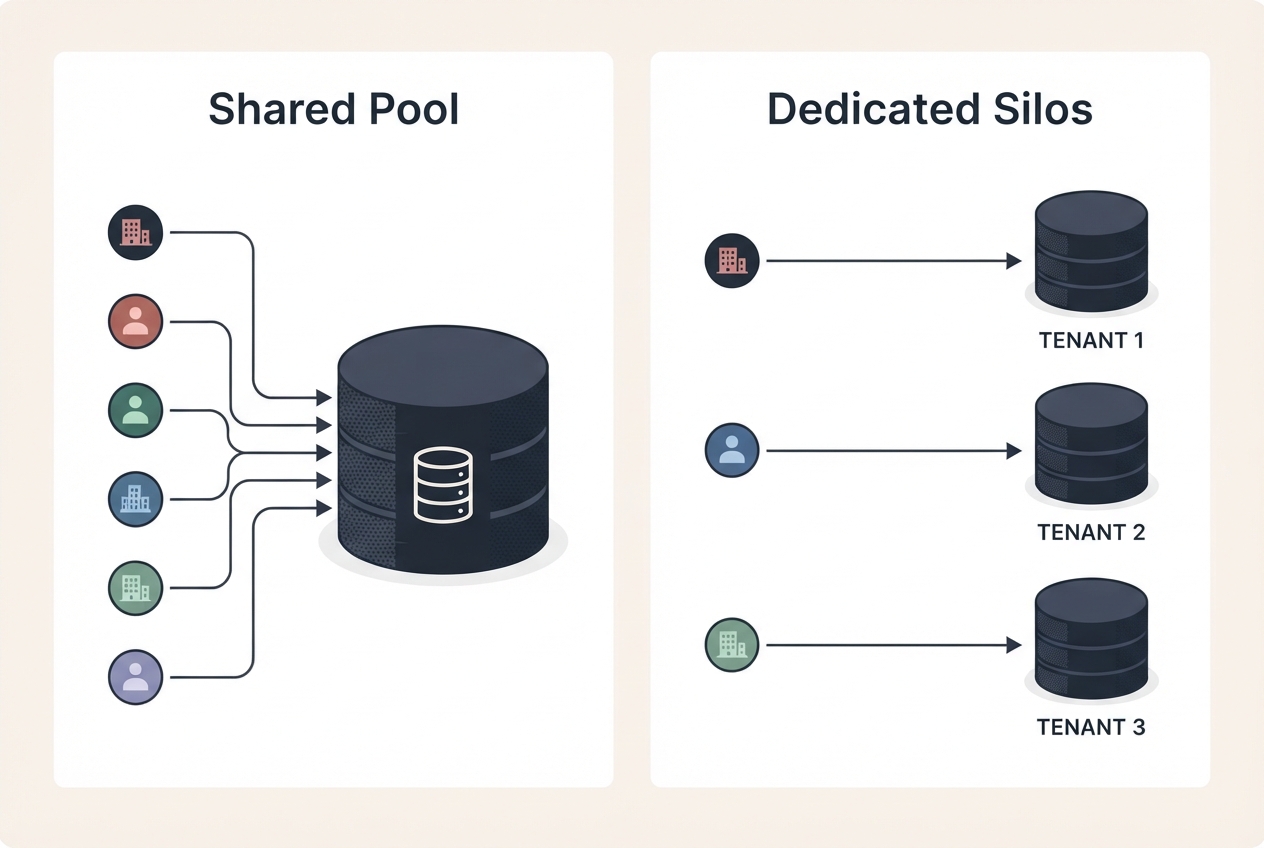
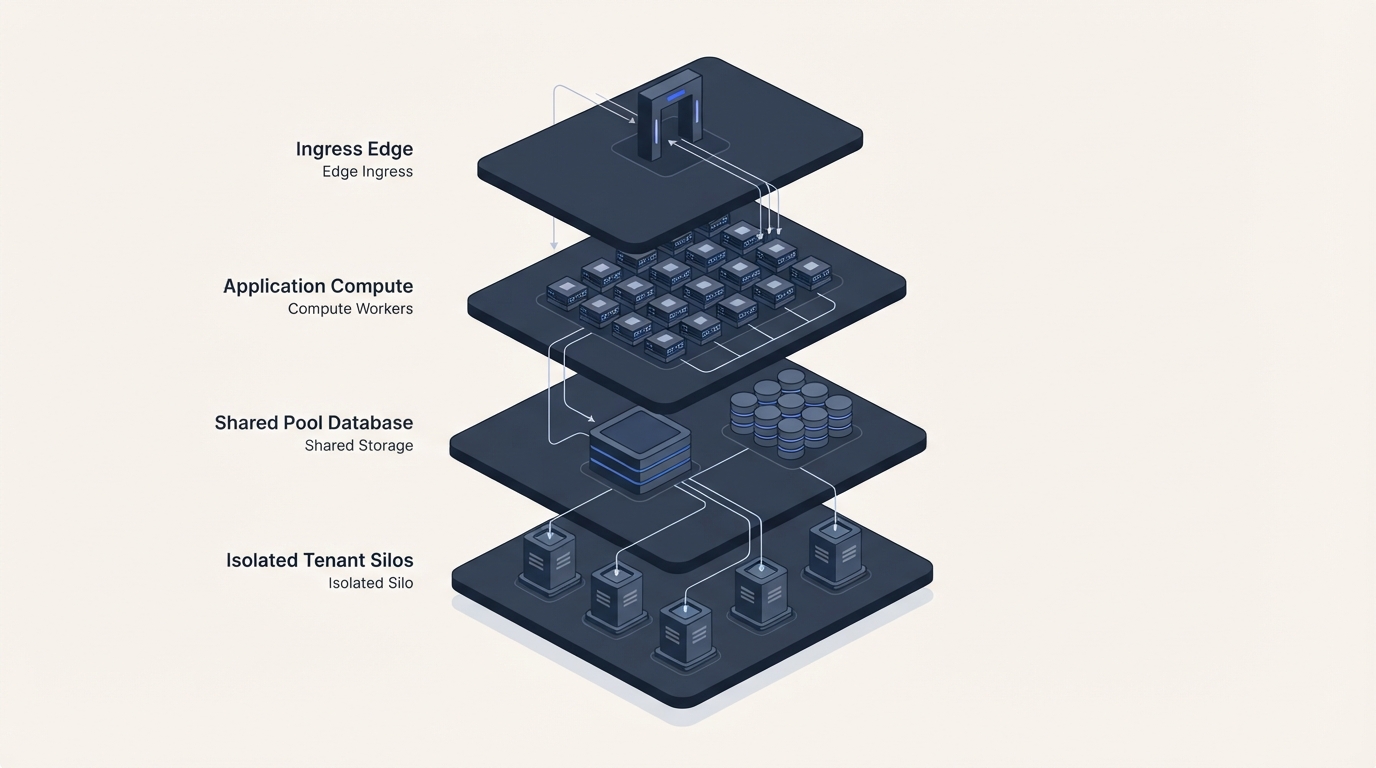
Selecting an appropriate tenant isolation model establishes the foundational trade-offs between operating expenses, architectural complexity, and security guarantees. In modern software engineering, platforms generally implement one of three standard structural approaches: pooled environments, siloed deployments, or hybrid partitioning models. Each framework addresses operational efficiency and tenancy boundaries differently, dictating how infrastructure reacts under varying user volumes and tenant configurations.
Pooled architectures represent the most resource-efficient design, wherein application compute workers, internal memory caches, and persistent database schemas are completely shared across all onboarded organizations. Logical boundaries separate customer records within shared tables, predominantly enforced by database-level filtering. While this approach dramatically reduces baseline cloud hosting bills and simplifies collective application upgrades, it introduces operational vulnerabilities such as cross-tenant resource contention and accidental data exposure risks if queries lack appropriate filtering parameters.
Conversely, siloed architectures allocate completely discrete compute, network, and storage footprints to individual customers. High-tier enterprise buyers frequently mandate dedicated database instances, separate encryption management, and distinct virtual networks to guarantee compliance with regional data sovereignty standards. While providing absolute isolation, siloing every customer multiplies operational overhead, complicates automated deployment cycles, and escalates baseline cloud costs. Many organizations seeking to navigate these trade-offs explore SnapKodex services to systematically evaluate infrastructural readiness before refactoring their core application layers.
- Pooled models optimize hardware utilization and reduce cloud spend but demand robust tenant filtering controls.
- Siloed models provide strict hardware and data separation, eliminating cross-tenant blast radiuses at higher operational costs.
- Hybrid strategies dynamically place self-serve customers into shared pools while provisioning private silos for enterprise tiers.
Evaluating Siloed Versus Pooled Data Footprints
Data persistence models carry the most lasting implications for platform maintenance and scalability. When designing persistent storage layers, engineering leaders must balance schema agility against tenant blast radiuses. In a fully pooled database model using shared schemas, a single unindexed query or runaway batch export executed by one organization can saturate database CPU cycles and disk I/O, leading to severe latency across the entire user base.
A hybrid data footprint provides a balanced compromise. Under this framework, standard users and self-serve tiers reside within a shared multi-tenant database partitioned via logical identifiers, whereas high-value accounts occupy dedicated database instances or distinct tenant schemas. The data access layer dynamically inspects the authenticated tenant profile and routes read and write operations to the designated storage target without requiring distinct codebases.
Managing Noisy Neighbors and Resource Contention
Noisy-neighbor disruptions occur when an active tenant monopolizes shared compute or storage capacity, degrading service quality for neighboring tenants. Mitigating this risk requires defensive architectural engineering, including strict rate limiting at ingress gateways, fair-share worker queue algorithms, and per-tenant CPU quota enforcement.
Implementing tiered token buckets at the application gateway level ensures that traffic spikes from one tenant receive immediate throttling before consuming downstream compute clusters. As organizations establish these operational patterns, consulting resources like the SnapKodex home platform helps teams review best practices for multi-tenant SaaS delivery and reliable cloud deployment.
How Should You Propagate Tenant Context Across System Layers?
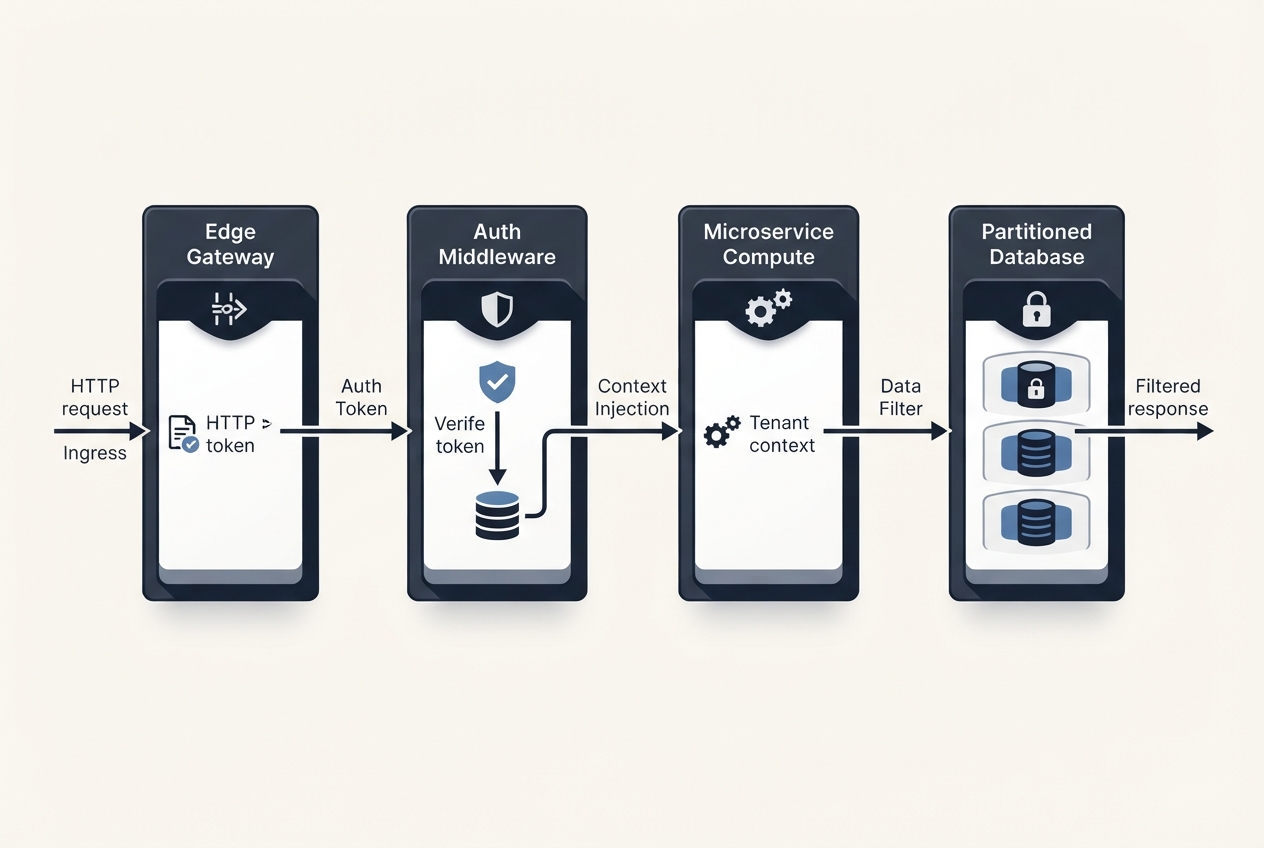
Maintaining absolute multi-tenant boundaries relies entirely on deterministic tenant context propagation. The platform must treat tenant identity as an immutable execution invariant that originates at the perimeter gateway and securely traverses every intermediate service, background asynchronous worker, and persistent database connection.
When an incoming HTTP or WebSocket request reaches the ingress layer, the edge proxy or authentication middleware verifies the incoming cryptographic token, such as an OpenID Connect JSON Web Token. The gateway extracts verified claims, including the tenant identifier and role attributes, and injects them into verified internal headers like x-tenant-id before forwarding traffic downstream. Internal microservices reject any request missing an authenticated tenant context header.
- Extract and cryptographically validate tenant identity tokens at the ingress network edge.
- Inject verified tenant identifiers into internal HTTP headers and asynchronous message envelopes.
- Propagate tenant metadata into distributed tracing spans to enable granular per-tenant observability.
Enforcing Row-Level Security at the Storage Layer
Relying solely on developers to remember tenant filtering clauses in raw SQL queries is a proven path toward cross-tenant data leakage. Resilient platforms shift authorization directly into the database engine through native Row-Level Security policies. Under this model, the application connection pool assigns the active tenant identifier to a database session variable before executing transactions.
The database engine enforces table-level security rules that automatically append filtering constraints to every SELECT, UPDATE, and DELETE statement. If a software bug or broken authorization logic omits an account check, the database engine blocks access to rows that do not match the active session context. Engineering teams wanting deep design audits can Contact SnapKodex to discuss hardening access control layers.
How Do Modern Platforms Handle AI Workload Governance?
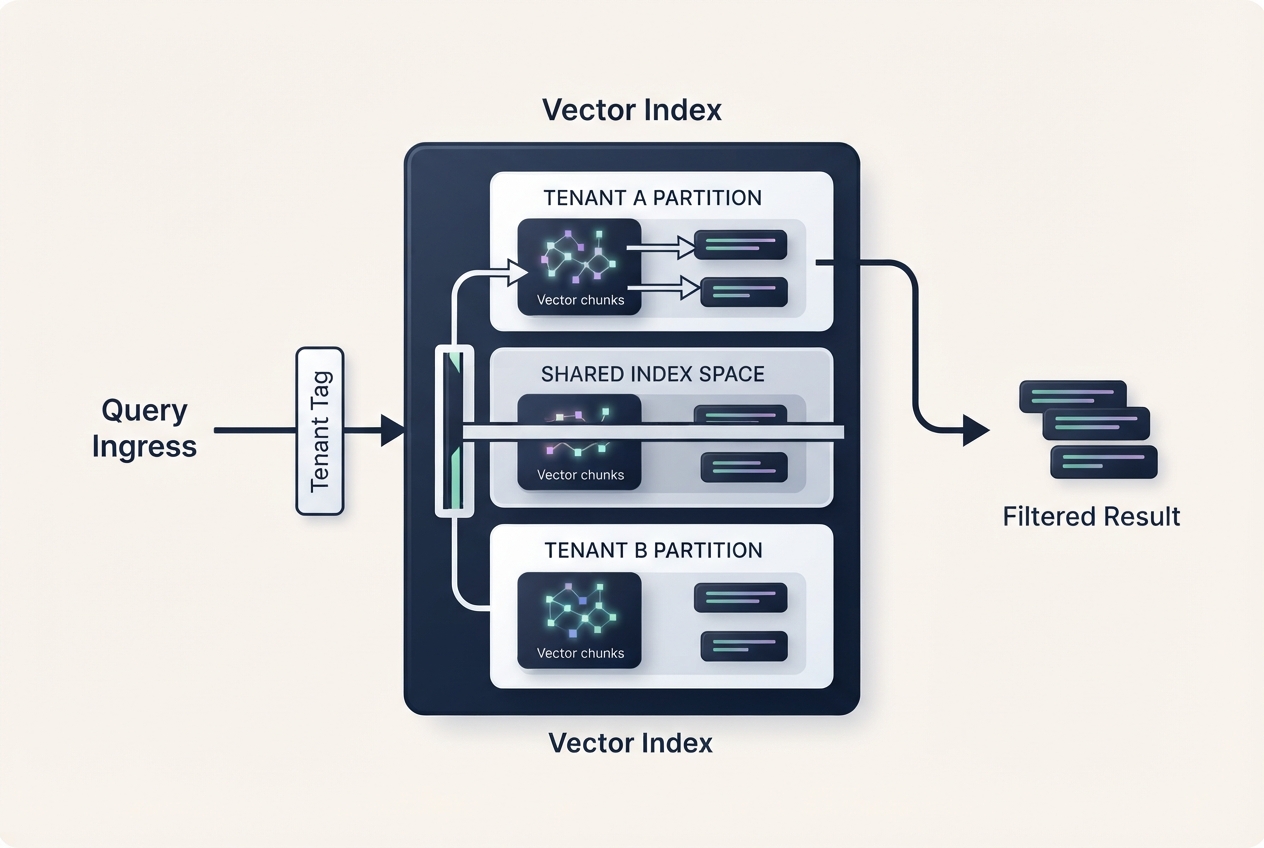
The rapid integration of generative artificial intelligence and large language models into SaaS products creates novel tenancy challenges. Multi-tenant AI systems must protect sensitive proprietary data from inadvertently bleeding into shared embedding indices, fine-tuning datasets, or unpartitioned cache layers.
Vector databases supporting retrieval-augmented generation must implement rigorous tenant-scoped search boundaries. In pooled vector databases, every document chunk and vector embedding must store verified tenant metadata. The retrieval pipeline must apply strict pre-filtering on the tenant identifier prior to executing approximate nearest neighbor calculations, ensuring semantic search results never traverse corporate boundaries.
Furthermore, multi-tenant AI architectures require fine-grained consumption tracking. Large language model API calls carry substantial marginal costs. Tracking token usage, inference latency, and tool invocations on a per-tenant basis allows SaaS platforms to enforce tier-based quotas, apply dynamic rate limits, and provide transparent billing breakdowns to enterprise customers.
- Enforce strict metadata filtering in vector retrieval layers to isolate tenant documents.
- Meter per-tenant token usage to prevent quota exhaustion and support accurate billing.
- Isolate inference contexts and conversation memories to guarantee enterprise confidentiality.
What Compliance and Security Measures Are Essential for Modern SaaS?
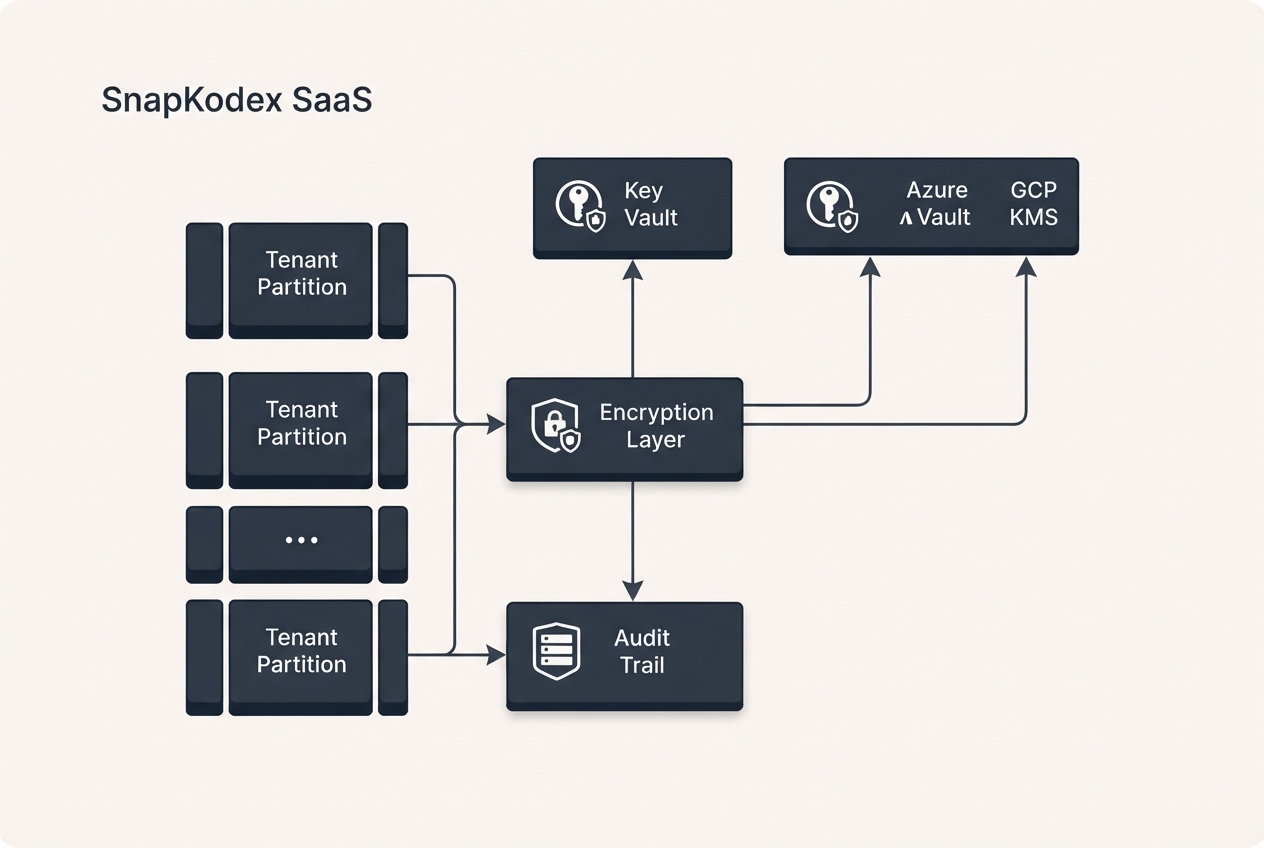
Enterprise procurement teams expect SaaS vendors to demonstrate rigorous data isolation, comprehensive auditing capabilities, and strict compliance alignment with frameworks like SOC 2, ISO 27001, and GDPR. Engineering leaders must treat compliance as an architectural prerequisite rather than an afterthought.
Cryptographic isolation is essential for enterprise adoption. Beyond standard encryption in transit and at rest, platforms serving regulated industries must support customer-managed encryption keys. Under this approach, each enterprise customer controls their master encryption key hosted in their preferred key management service, granting them the ability to revoke access to their data instantaneously.
Comprehensive distributed audit logging forms the final pillar of a resilient architecture. Every administrative action, privilege change, and tenant-scoped data query must emit immutable structured events containing the actor identity, tenant identifier, timestamp, and target resource. Centralizing these logs enables rapid forensic analysis during incident investigations and delivers clear proof of operational isolation during customer security audits.
- Offer customer-managed encryption keys to provide enterprise clients with data sovereignty.
- Generate immutable audit trails recording all tenant data access and administrative changes.
- Automate tenant provisioning and offboarding pipelines to prevent orphaned permissions and dangling resources.
Tenant Isolation Strategy Comparison
A comparative evaluation of pooled, siloed, and hybrid architectural models across key operational dimensions.
| Isolation Model | Cost Efficiency | Data Isolation Strength | Operational Complexity | Noisy-Neighbor Risk |
|---|---|---|---|---|
| Pooled Architecture | Highest (maximum resource sharing) | Logical (enforced via software filters) | Lowest (unified schema and infrastructure) | High (requires proactive rate limiting) |
| Siloed Architecture | Lowest (dedicated resources per tenant) | Physical (dedicated database or compute) | Highest (multiplied operational management) | None (isolated hardware footprints) |
| Hybrid Architecture | Moderate to High (tier-optimized allocation) | Tiered (logical for standard, physical for enterprise) | Moderate (dynamic query routing required) | Low (premium accounts isolated from shared load) |
Frequently asked questions
What is the primary difference between pooled and siloed multi-tenant architectures?
Pooled architectures share application compute and database resources across all tenants to maximize hardware efficiency and reduce costs. Siloed architectures provision dedicated computing infrastructure or isolated databases for individual enterprise clients to guarantee complete data isolation and eliminate performance contention.
How do you prevent cross-tenant data leaks in a shared database?
Engineering teams prevent leaks by establishing row-level security policies directly in the database engine, propagating cryptographically validated tenant IDs across internal calls, and binding session variables so queries cannot omit tenant filters.
Why is tenant context propagation important for observability?
Injecting tenant identifiers into distributed tracing spans, performance metrics, and structured logs allows engineers to reconstruct transaction flows, measure per-tenant resource consumption, and debug anomalies during operational incidents.
How should SaaS platforms handle vector storage for AI features in a multi-tenant environment?
Platforms must attach explicit tenant metadata tags to all embedded vector records and enforce strict pre-filtering during vector search queries to ensure users only retrieve authorized internal documents.