How to Implement AI Code Generation Safely in Production
What Are the Primary Security Risks of AI-Generated Code?
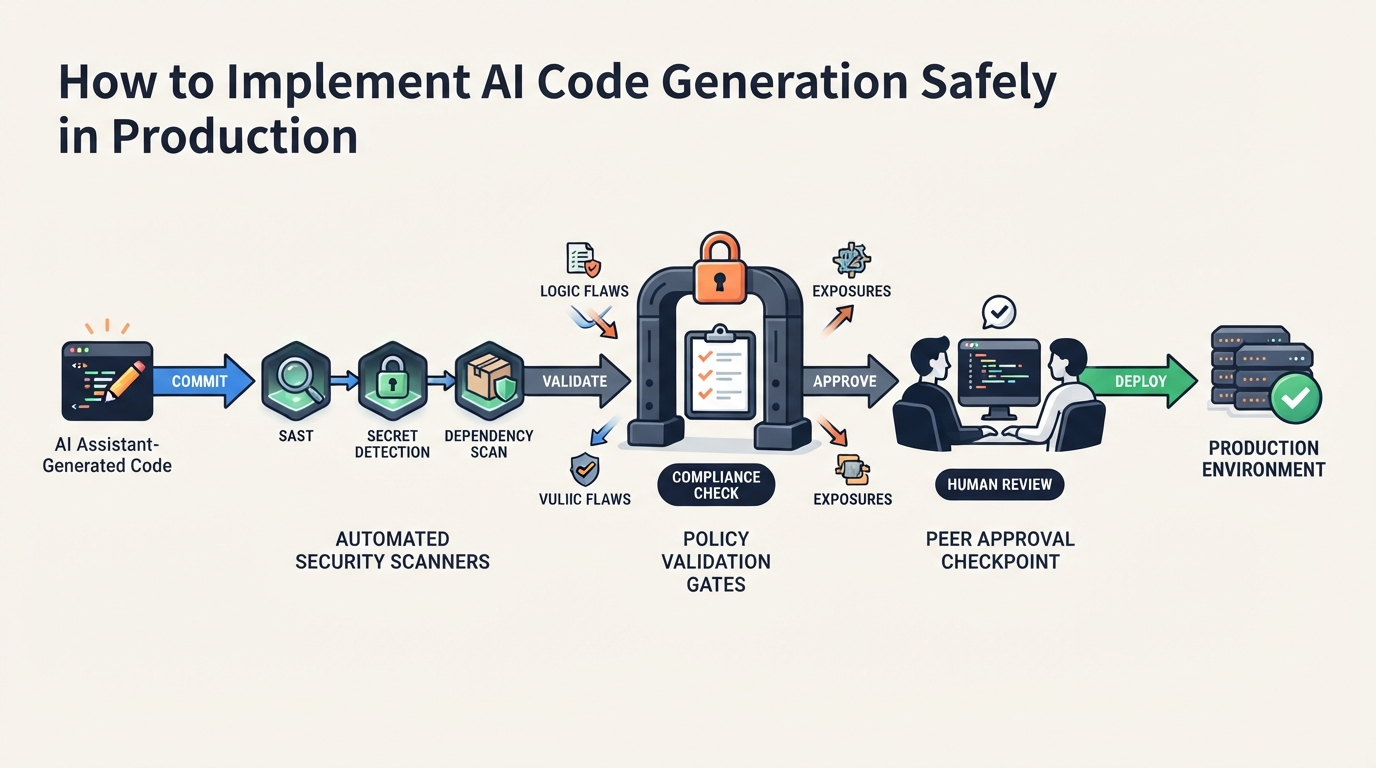
Adopting artificial intelligence coding assistants dramatically increases the sheer volume of code submitted across modern enterprise repositories. Industry data indicates that roughly eighty-four percent of enterprise engineering organizations observe steady code volume expansion immediately after integrating automated tools into developer workflows. However, this hyper-acceleration frequently triggers severe bottlenecks during pull request evaluations, creating conditions where unvetted modules slip into production under velocity pressure. Recent security surveys reveal that one in five organizations has already suffered a serious security incident directly traceable to automated code generation flaws.
The underlying challenge stems from how neural networks formulate recommendations. Because models synthesize outputs based on probabilistic token sequences rather than verified domain models, they regularly output syntactically polished code containing catastrophic logical flaws. When development teams prioritize deployment velocity above structural verification, these subtle flaws propagate unchecked into mission-critical infrastructure. Standard vulnerability scanning approaches frequently prove insufficient because traditional tools expect well-known static syntax signatures rather than nuanced architectural omissions.
Engineering organizations must therefore catalog the precise threat vectors introduced by synthetic code before standardizing these tools across production pipelines. Addressing these vulnerabilities requires moving past naive syntax checking and examining deep logic and dependency mechanics.
- Broken access control mechanisms and flawed business logic that bypass standard pattern-matching scanners.
- Hallucinated third-party package dependencies that expose software supply chains to malicious namespace takeover.
- Accidental inclusion of hardcoded secrets, database credentials, and production API tokens within prompt outputs.
- Subtle regressions in concurrency control, thread safety, and resource cleanup within high-load distributed services.
Understanding Logic Flaws and Supply Chain Threats
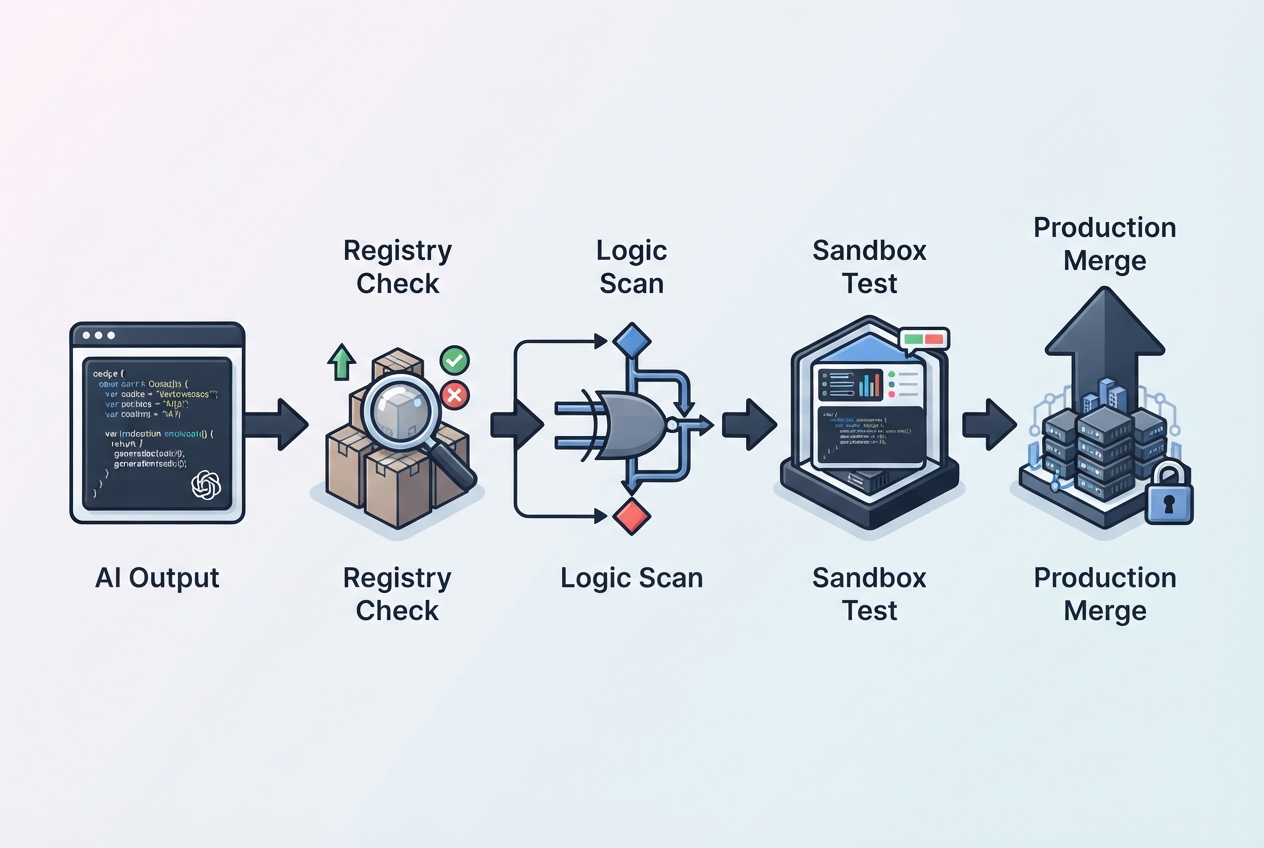
AI assistants trained on public repositories inherently learn both elegant patterns and historical antipatterns. When an assistant suggests an open-source library, it occasionally hallucinates a plausible package identifier that does not exist in public registries. Threat actors exploit this behavior by registering these phantom package names and injecting malicious payloads, exposing downstream projects to immediate compromise upon build execution.
Furthermore, conventional Static Application Security Testing relies heavily on known vulnerability signatures. Such tools consistently fail when evaluating complex business logic, such as ensuring an authenticated tenant cannot query another tenant's records through parameter manipulation. Human architecture reviews remain essential for validating authorization context.
How Can Engineering Leaders Build Effective Guardrails?
Safely scaling AI coding tools requires establishing multi-layered technical safeguards rather than relying on developer discretion alone. Engineering leaders should treat synthetic code as output from an unverified junior contributor whose proposals demand systematic validation before reaching trunk branches. By enforcing defensive constraints early in the software development lifecycle, organizations prevent flawed patterns from accumulating into enterprise technical debt.
Teams standardizing their technical documentation and engineering communications can review https://snapkodex.com/services/seo-content to align visibility frameworks, or evaluate technical advisory resources through SnapKodex services to maintain operational discipline across complex projects. Robust guardrails prevent uncontrolled proliferation of vulnerable implementations across internal frameworks.
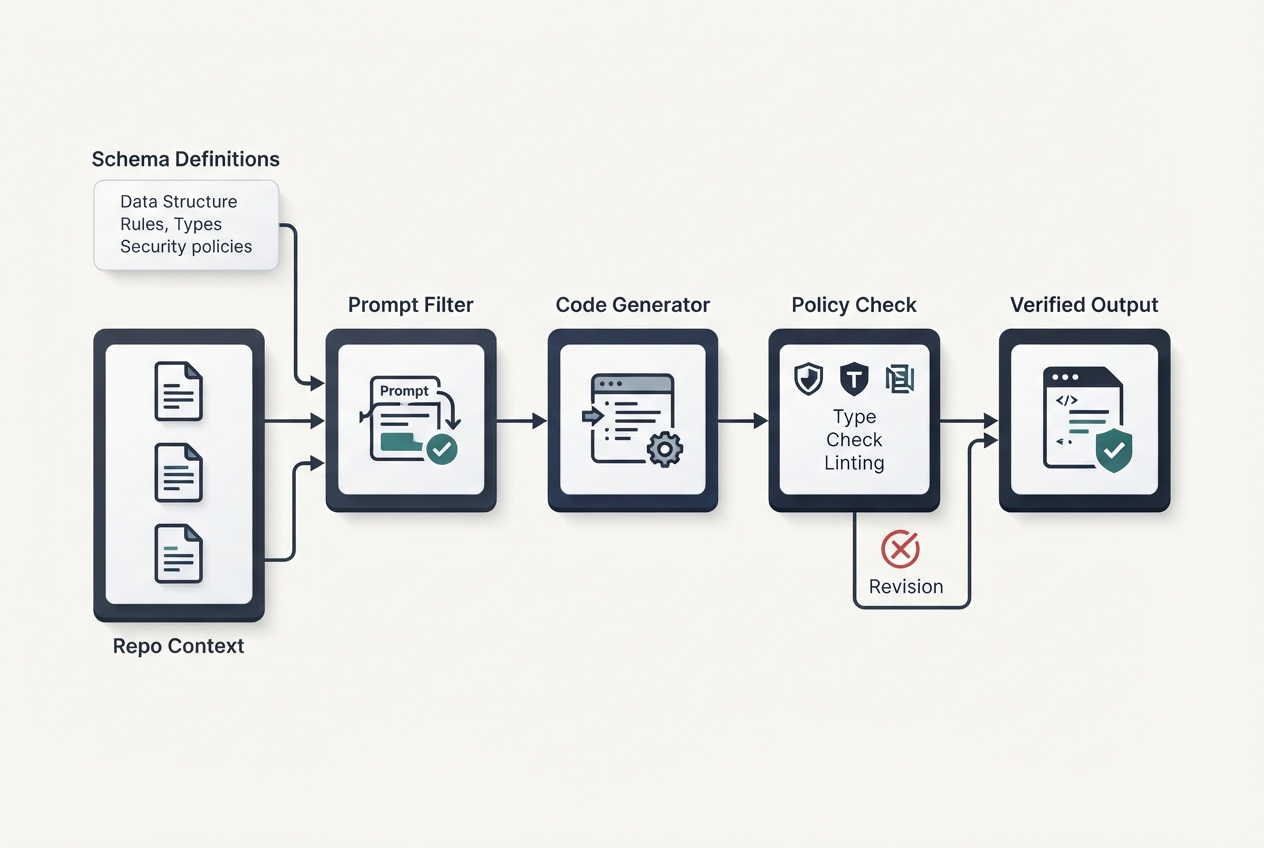
Modern guardrails must incorporate both upstream constraints during prompt composition and downstream validation during continuous integration. Supplying rich contextual metadata grounds the assistant, while automated policy checks ensure the generated code satisfies mandatory runtime standards before any merge occurs.
- Enforce context-rich prompting conventions and dedicated architectural constraint files across local editors.
- Integrate compiler-level policy verification and automated type-checking suites directly into build scripts.
- Deploy secret scanners to flag hardcoded keys, tokens, and credentials before local commits reach remote branches.
- Establish deterministic build boundaries that restrict automated tools from modifying core infrastructure definitions without explicit managerial approval.
Context-Rich Prompting and Architecture Rules
Providing coding models with comprehensive context minimizes out-of-context logic errors. Modern development workflows utilize repository-level constraint files, such as internal rules directories and protocol servers, to inject architectural patterns, database schemas, and approved error-handling idioms directly into model prompts.
When an assistant understands existing system contracts, it rarely generates incompatible interfaces or deprecated library calls. Restricting generation to structured patterns ensures consistent code organization and simplifies peer review.
Why Is Human Governance Essential in Automated Pipelines?
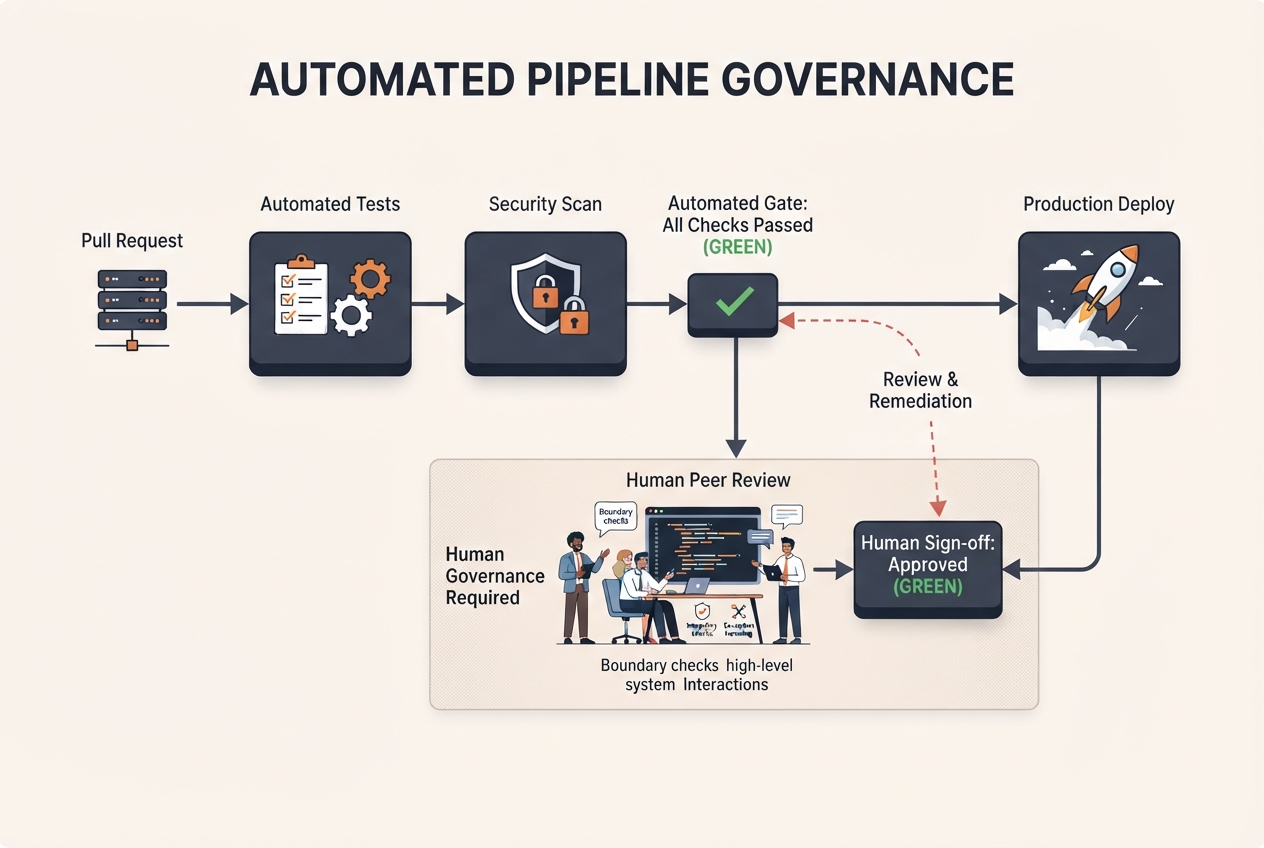
While automated security checkers and linters detect superficial bugs, they cannot substitute for human judgment regarding overall system resilience and organizational intent. Automated assistants lack genuine comprehension of domain edge cases, regulatory constraints, and downstream failure modes. Human reviewers must therefore transition from checking formatting rules to interrogating high-level architectural interactions.
To maintain organizational momentum while adopting advanced automation, teams often examine practical digital playbooks like the https://snapkodex.com/blog/ai-marketing-guide, which demonstrates how structured oversight keeps algorithmic outputs aligned with core business objectives. Similar governance practices apply directly to code repositories.
Engineering departments must establish formal ownership models ensuring that every automated line committed to a production branch has an accountable staff engineer who understands its lifecycle implications and operational behavior.
- Shift peer review focus toward system boundaries, integration contracts, and exception-handling pathways.
- Implement cross-model validation routines where a separate evaluation model checks logic consistency prior to human review.
- Mandate named developer ownership for all pull requests containing machine-generated code blocks.
- Prohibit automated pull requests from merging without explicit, documented approvals from repository maintainers.
Establishing Clear Accountability Frameworks
Accelerating generation without structured accountability quickly dilutes code ownership. If an outage occurs, teams cannot hold an automated model responsible; an engineer must understand the design decisions within every deployed pull request.
Engineering managers must institute transparent audit logs detailing which modules involved synthetic assistance. Clear attribution ensures that developers remain actively engaged during review cycles rather than blindly accepting automated completions.
How Can Organizations Measure and Maintain Code Quality Over Time?
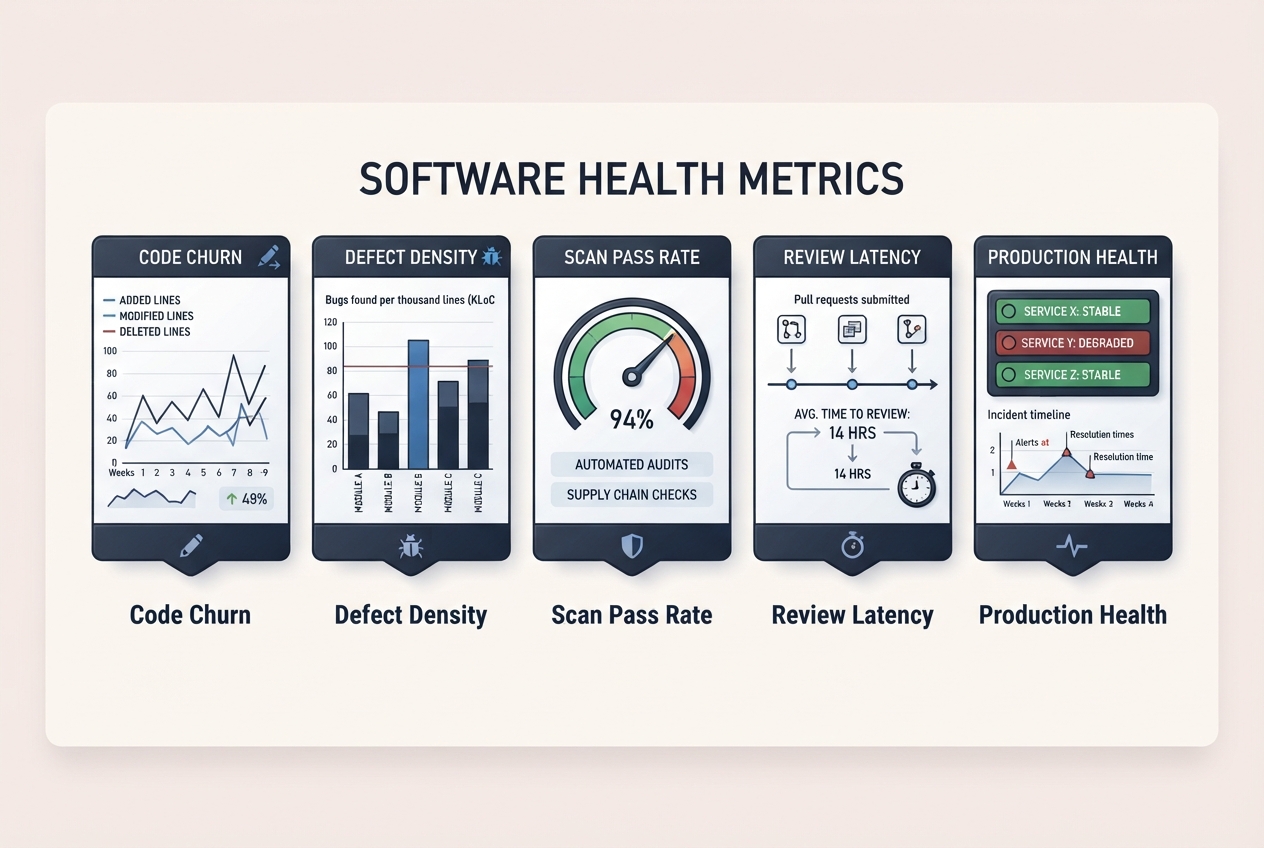
Maintaining software health across organizations utilizing synthetic generation requires continuous monitoring of code churn, defect arrival rates, and security remediation timelines. Engineering leadership must verify whether modules developed with automated assistants experience higher rates of post-release bugs compared to manually written services.
Leadership teams should explore foundational industry insights via SnapKodex home and connect directly through Contact SnapKodex to benchmark operational engineering methodologies against contemporary digital standards. Establishing reliable metric baselines prevents technical debt from quietly eroding system stability over successive quarters.
Long-term success depends on continuous refinement. By reviewing post-incident analyses and tracking vulnerability origins, engineering teams can continuously tune their prompt contexts, security scanners, and review standards to match evolving model capabilities.
- Track post-release bug frequency and code churn rates specifically across AI-assisted codebases.
- Perform periodic automated audits of dependency manifests to detect supply chain discrepancies early.
- Conduct quarterly reviews of developer prompts and contextual configuration files to incorporate lessons learned from production incidents.
- Evaluate test coverage completeness, ensuring that automated code includes comprehensive negative test assertions.
Continuous Improvement and Retrospective Reviews
Engineering teams should hold regular retrospective sessions focused on tool outcomes and failure patterns. Sharing practical experiences helps developers identify misleading suggestions and build effective prompting conventions.
Iterative updates to shared configuration files ensure the entire development team benefits from individual discoveries, transforming isolated security lessons into robust systemic safeguards.
Traditional vs. AI-Augmented Production Security Practices
A direct comparison illustrating how conventional software security controls must adapt to manage the risks introduced by automated code generation tools.
| Security Dimension | Traditional Software Practice | AI-Augmented SDLC Requirement |
|---|---|---|
| Code Generation Velocity | Incremental commits manually written and reviewed by developers over days. | Rapid synthetic code output requiring pre-commit guardrails and automated triage. |
| Vulnerability Detection | Static pattern-matching SAST scanning for known syntax vulnerabilities. | Context-aware logic analysis, cross-model reviews, and runtime reachability scanning. |
| Dependency Management | Periodic dependency updates using curated internal mirrors and registries. | Strict automated validation to block hallucinated package names and namespace hijacking. |
| Developer Accountability | Individual authors possess complete mental models of written code logic. | Mandatory human-in-the-loop verification to ensure comprehension of generated lines. |
Frequently asked questions
What are the primary security risks of AI code generation in production?
The primary risks include broken access control, subtle business logic bugs, dependency vulnerabilities from hallucinated package names, and accidental exposure of hardcoded secrets or credentials.
Why do traditional security scanners struggle with AI-generated code?
Traditional Static Application Security Testing relies primarily on known syntax patterns. It frequently overlooks application-specific business logic errors and missing authorization checks.
How can engineering teams establish effective prompt guardrails?
Teams should use project-level rules files, internal architectural guidelines, and context-sharing protocols to ensure models adhere to existing schemas and security boundaries.
What is the role of human reviewers when evaluating AI-generated code?
Human engineers serve as accountable gatekeepers, focusing on domain logic, system integrations, edge cases, and maintainability rather than routine syntax formatting.