How to Design Multi-Agent Systems for Complex Enterprise Tasks
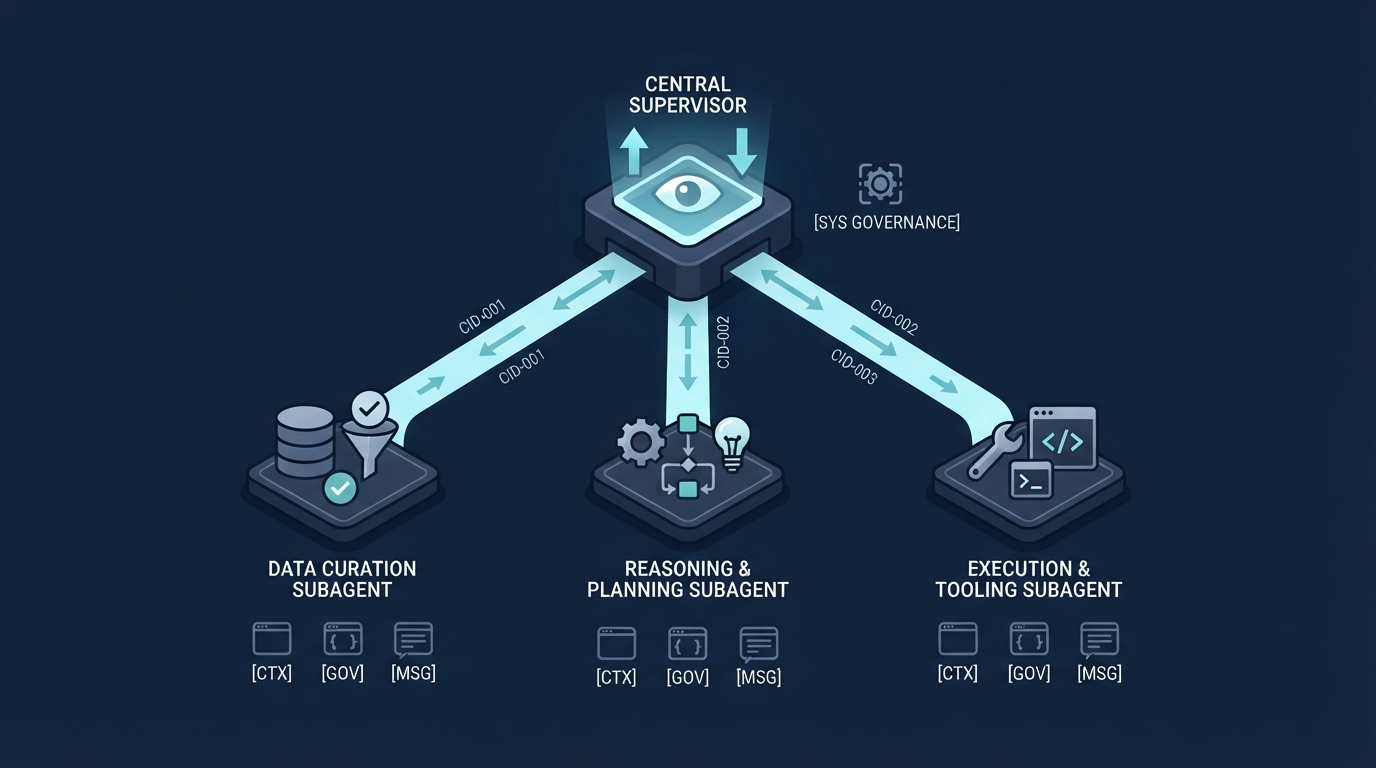
Why Single Agents Fail in Complex Enterprise Workflows?
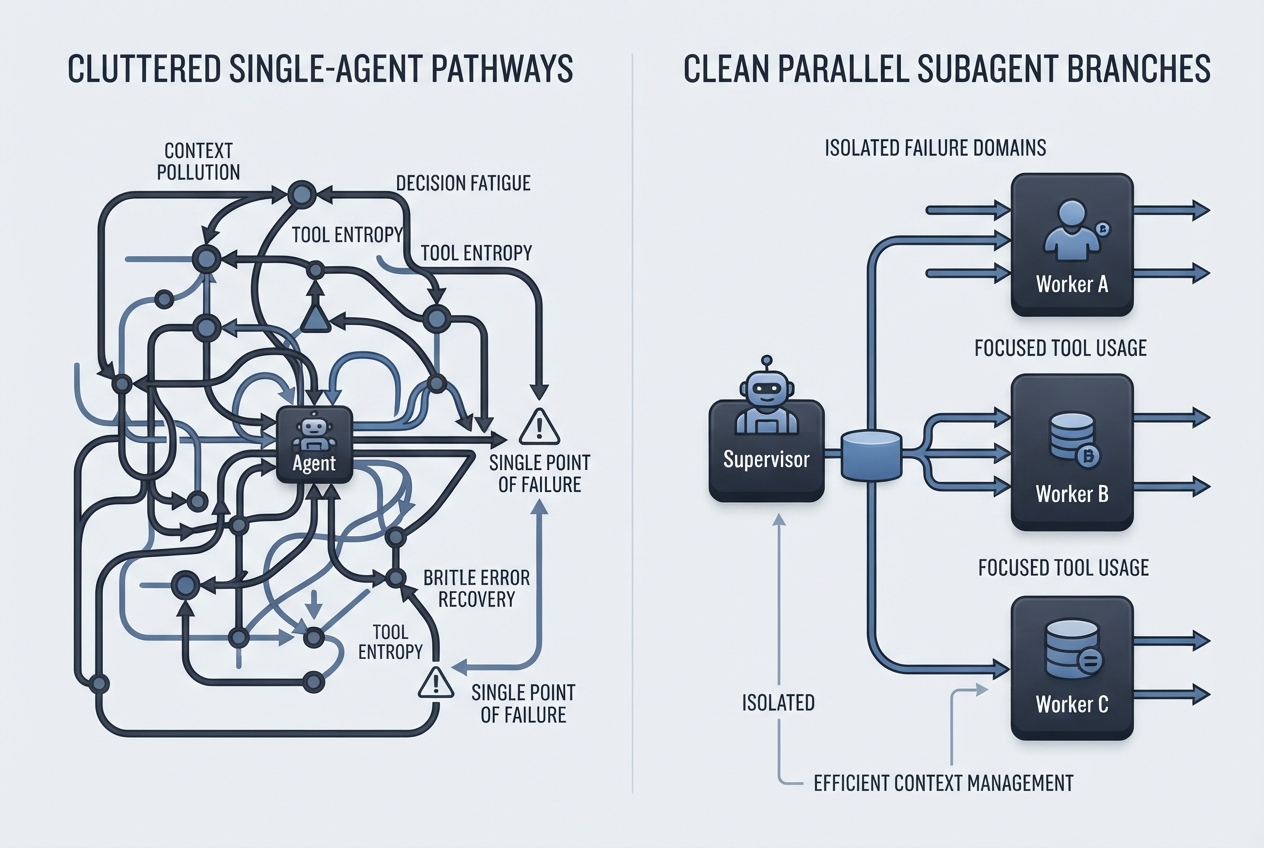
Monolithic single-agent LLM implementations regularly fail when confronted with complex enterprise workloads. While a single model can summarize documents or answer straightforward queries, it encounters severe architectural limits during multi-phase tasks like automated procurement or regulatory auditing. As conversations expand, prompt history accumulates rapidly, creating context pollution that causes the model to overlook critical instructions. Teams navigating initial implementation hurdles often visit the SnapKodex home platform to review structured deployment strategies.
A single model also suffers from tool-selection entropy. When an agent is exposed to dozens of enterprise application programming interfaces, the probability of parameter hallucination rises significantly. Moreover, monolithic agents possess brittle error recovery; an uncaught exception from one external tool call often halts the entire process. Transitioning to specialized multi-agent architectures isolates failure domains, ensuring that an error in one task does not crash the broader business pipeline.
- Context pollution degrades reasoning quality as intermediate tool data and execution traces flood the active prompt window.
- Excessive tool definitions cause decision fatigue, leading models to select incorrect APIs or invent input parameters.
- Monolithic architectures create single points of software failure where a single network timeout interrupts the entire business process.
Context Window Pollution and Reasoning Degradation
In extended enterprise workflows, an LLM context window accumulates raw database payloads, third-party API outputs, and intermediate reasoning steps. This noisy accumulation pushes early system instructions outside the effective attention span of the model. By decomposing complex workflows into distinct subagents, each component operates within a fresh, isolated context window tailored solely to its specific objective.
- Subagents maintain concise system prompts focused on specific domain schemas.
- Intermediate scratchpad data remains confined to child instances instead of degrading global execution memory.
Tool Selection Noise in Large Workflows
Granting a single agent access to enterprise resource planning, customer relationship management, and billing endpoints creates unmanageable cognitive load. The model frequently confuses API parameters or attempts to execute invalid operations. Distributing specialized toolsets across distinct worker agents restores deterministic accuracy and reduces costly execution retries across enterprise applications.
- Restricting tools to domain-specific clusters drops invocation error rates.
- Smaller prompt definitions lower baseline token overhead during repetitive tool calls.
What Are the Core Architectural Patterns for Multi-Agent Deployments?
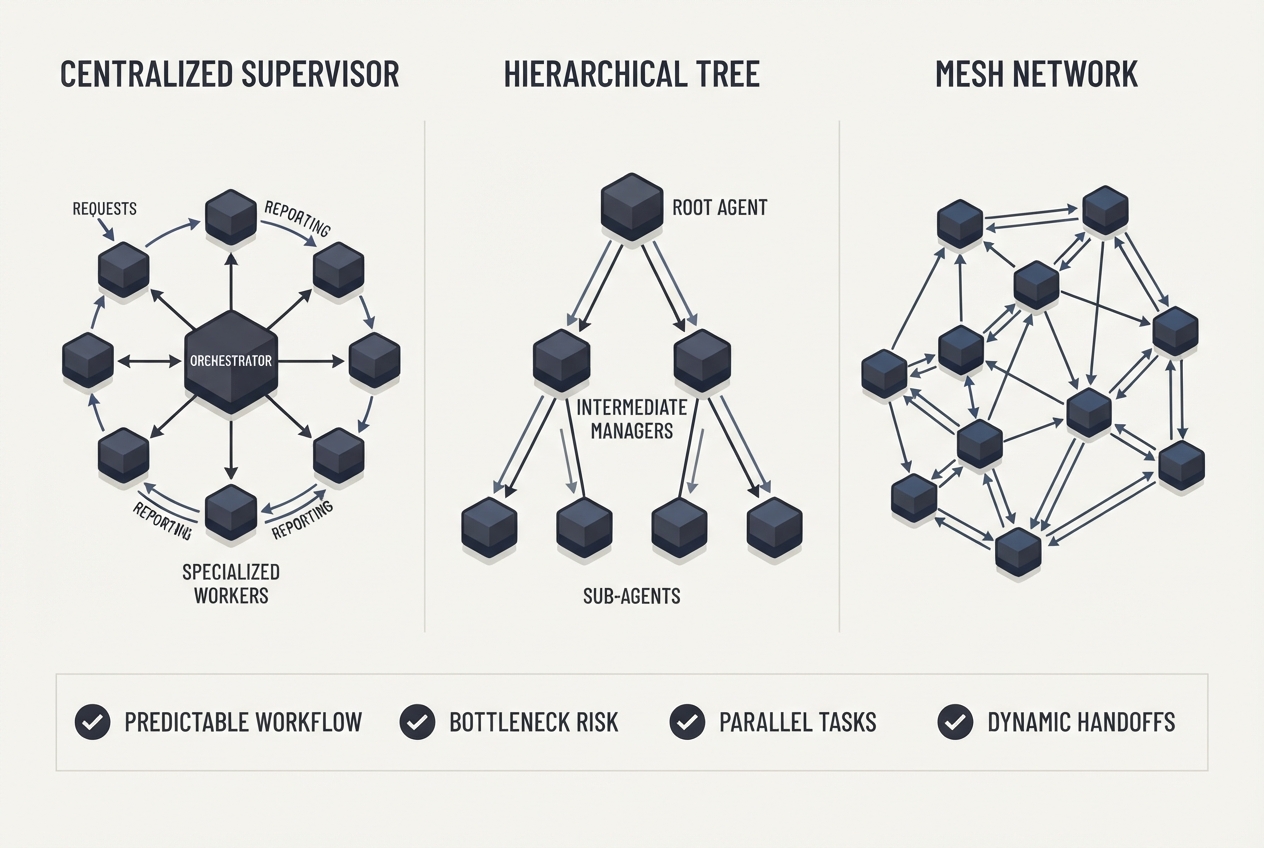
Selecting the appropriate structural topology is the most critical architectural decision when designing multi-agent systems. Enterprise deployments predominantly use three patterns: centralized supervisors, hierarchical subagent trees, and peer-to-peer handoffs. Choosing between these structures depends on organizational predictability requirements, task concurrency needs, and compliance controls. Those seeking structured execution frameworks often leverage SnapKodex services to systematically evaluate their infrastructure readiness.
Centralized supervisor models employ a primary orchestrator that assesses incoming requests, determines execution plans, and routes discrete tasks to specialized workers. This topology provides strong auditability and predictable output formatting. However, the supervisor agent can become a processing bottleneck under high transaction volumes and introduces a single point of failure if the orchestrator misinterprets initial user intent.
- Centralized supervisors maintain predictable workflows and simplify logging, but risk orchestrator throughput bottlenecks.
- Hierarchical subagent trees enable parallelized task execution with isolated context boundaries for deep research.
- Peer-to-peer swarms allow dynamic handoffs between agents, maximizing flexibility while complicating state traceability.
Hierarchical Subagents and Dynamic Fan-Out
Hierarchical architectures enable an orchestrator to dynamically spin up parallel child agents to investigate distinct data paths simultaneously. Each child agent completes its assignment, condenses findings, and returns a structured summary to the parent node. This fan-out approach is particularly valuable for comprehensive market intelligence, legal discovery, and multi-source technical analysis.
Engineering teams can learn more about aligning automation structures with enterprise growth by reviewing resources like the https://snapkodex.com/blog/ai-marketing-guide, which demonstrates structured content and workflow orchestration. Hierarchical decomposition prevents child agents from interfering with parallel research threads while allowing parent nodes to synthesize unified reports.
- Parallel execution dramatically reduces end-to-end task duration for independent research subtasks.
- Context isolation prevents cross-thread hallucination during multi-document synthesis.
Peer-to-Peer Swarms and Dynamic Handoffs
In a peer-to-peer or swarm configuration, agents transfer execution state directly to peers without returning to a central supervisor. For example, a triage agent passes a customer ticket directly to an account billing agent based on extracted intent. While this pattern reduces routing latency, maintaining global state consistency requires rigorous validation rules to prevent infinite handoff loops.
- Direct handoffs minimize central routing latency in straightforward triage workflows.
- Strict hop limits must be enforced to prevent circular handoff conditions between peer agents.
How to Manage Communication Protocols and State Consistency?
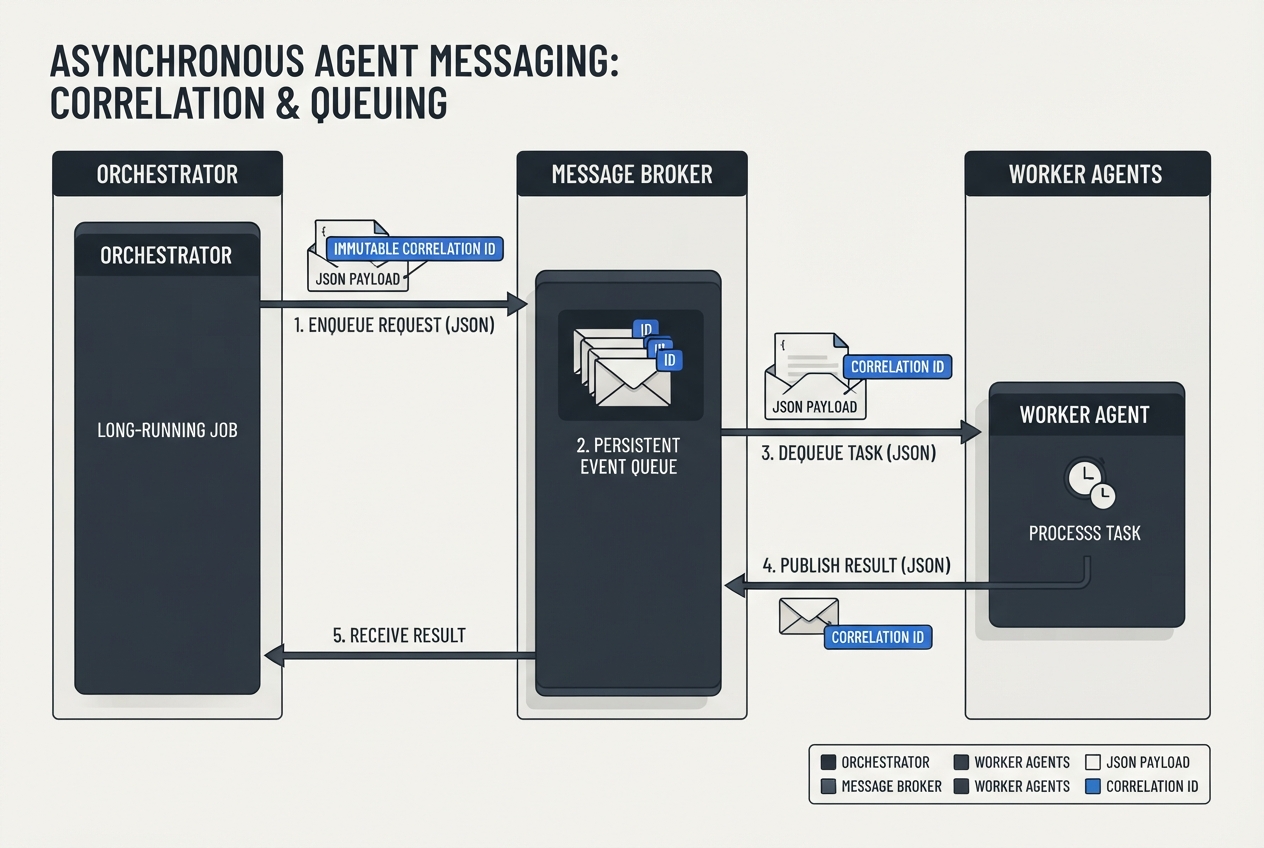
Maintaining state consistency across distributed agent networks requires structured communication protocols. In production environments, relying on unstructured natural language exchanges between agents leads to compounding parsing errors and unpredictable tool parameters. Enterprise systems instead require strongly typed schemas, such as JSON schemas, to govern every inter-agent message payload.
Furthermore, synchronous HTTP request-response patterns are poorly suited for long-running agent workflows. If an agent takes several minutes to execute code or retrieve enterprise data, synchronous connections risk timing out. Implementing asynchronous message brokers with persistent event queues ensures reliable message delivery and state durability during complex multi-step jobs.
- Use strongly typed data contracts to ensure inter-agent messages parse predictably without syntactic degradation.
- Adopt asynchronous message queues to decouple agent execution times and prevent network connection timeouts.
- Attach immutable correlation identifiers to every transaction to enable distributed tracing across agent boundaries.
Implementing Correlation IDs for Distributed Tracing
Because multi-agent workflows execute non-linearly, debugging execution failures requires comprehensive observability. Assigning a unique correlation ID to the initial request allows monitoring tools to trace every downstream subagent call, tool invocation, and state transformation. This traceability is essential for compliance audits and identifying specific prompts that triggered execution errors.
- Correlation IDs connect parent tasks with child agent threads across disparate infrastructure services.
- Distributed tracing highlights latency bottlenecks and excessive retry loops in production pipelines.
State Serialization and Handoff Boundaries
When handing off context between agents, sending the full conversational history is inefficient and costly. Systems should instead serialize only the essential state variables, completed action summaries, and remaining objectives. Defining explicit state schemas ensures the receiving agent receives actionable context without inheriting prompt bloat from previous reasoning steps.
- State compression filters out intermediate scratchpad outputs before passing data downstream.
- Structured handoff schemas prevent context truncation and lower overall token consumption.
What Are the Main Trade-Offs and Governance Risks in Production?
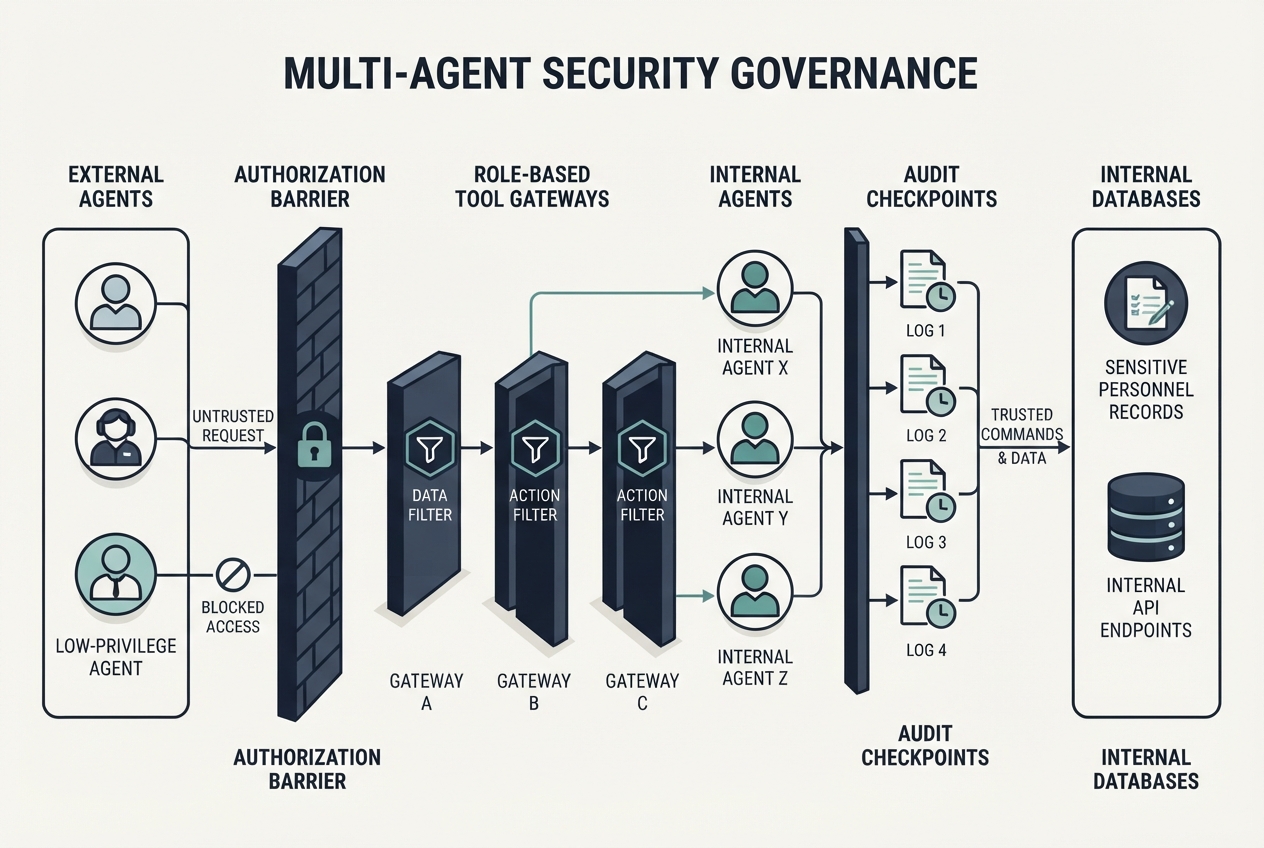
Deploying multi-agent systems introduces distinct operational trade-offs and security challenges that architects must balance. The most immediate operational trade-off is computational cost. Multi-agent systems can consume up to fifteen times more tokens than single-agent setups due to frequent context re-evaluations, intermediate reasoning summaries, and inter-agent communication overhead.
Security governance represents another critical challenge. When agents are granted permissions to invoke internal APIs or delegate tasks to peer nodes, cross-layer privilege escalation becomes a realistic threat. A low-privilege customer-facing agent must never be able to prompt an internal agent into executing unauthorized database modifications or accessing sensitive personnel records.
- Token consumption increases drastically in multi-agent topologies, requiring prompt caching and response compression.
- Cross-layer privilege escalation occurs when trusted internal agents inherit unvalidated parameters from external agents.
- Organizations require strict identity and access management boundaries applied directly at the tool-invocation layer.
Mitigating Cost with Prompt Caching and Model Tiering
To control expanding token budgets, architects should apply model tiering across the agent fleet. Routine classification, data extraction, and formatting tasks can be delegated to smaller, cost-effective models, reserving frontier reasoning models exclusively for the lead supervisor. Implementing prompt caching for static system instructions further diminishes token costs across high-frequency workflows.
- Model tiering routes simpler operational subtasks to low-latency, economical models.
- Prompt caching reduces redundant token processing on recurring system instructions and tool schemas.
Zero-Trust Agent Authorization Boundaries
Enterprise security frameworks must treat every agent message as an unauthenticated input payload. Subagents executing database queries or financial transactions should independently validate user authorization scopes rather than blindly trusting caller requests. Incorporating human-in-the-loop approvals for high-impact actions provides a vital safeguard against unintended automated behaviors. To discuss custom governance frameworks, teams can Contact SnapKodex to establish verified enterprise controls.
- Enforce role-based access control at the individual API gateway rather than within the agent prompt.
- Mandate human confirmation checkpoints before executing irreversible financial or system-altering actions.
Comparison of Multi-Agent Architectural Topologies
Evaluating the structural strengths, failure risks, and recommended enterprise use cases across primary multi-agent design patterns.
| Topology Pattern | Core Advantage | Primary Risk | Ideal Use Case |
|---|---|---|---|
| Centralized Supervisor | High predictability, simplified audit logging, and consistent output validation | Orchestrator throughput bottlenecks and single point of systemic failure | Structured multi-step compliance audits, transactional billing, and automated approvals |
| Hierarchical Subagents | Dynamic parallel processing with clean context window isolation | Compounding token consumption and complex state aggregation logic | In-depth market intelligence, legal discovery, and multi-source document synthesis |
| Peer-to-Peer Swarm | Low central routing latency and adaptive execution paths | Risk of circular handoffs and difficult distributed state debugging | Real-time event monitoring, support ticket triage, and operational incident response |
Frequently asked questions
Why do multi-agent systems consume significantly more tokens than monolithic models?
Multi-agent systems pass intermediate reasoning steps, raw tool outputs, and orchestration messages between multiple distinct models and subagents. This frequent exchange of contextual state can increase total token usage by up to 15 times compared to a single-agent interaction.
What is the primary difference between a centralized supervisor and a hierarchical agent structure?
A centralized supervisor uses a static router model to direct predefined tasks to worker agents and assemble the results. In contrast, a hierarchical pattern allows a lead agent to dynamically spawn and terminate specialized child agents with isolated context windows on an ad-hoc basis.
How do correlation IDs improve reliability in distributed multi-agent systems?
Correlation IDs attach an immutable identifier to an incoming transaction, propagating across all child subagent requests, message queues, and tool invocations. This allows observability platforms to reconstruct non-linear execution traces, locate failure points, and measure latency.
How can enterprises prevent privilege escalation across agent communication layers?
Organizations must implement zero-trust authorization at the API tool gateway rather than relying on natural language prompts. Every tool call must independently validate user authentication tokens and role scopes, complemented by human-in-the-loop checkpoints for irreversible actions.