How to Conduct Technical Due Diligence for SaaS
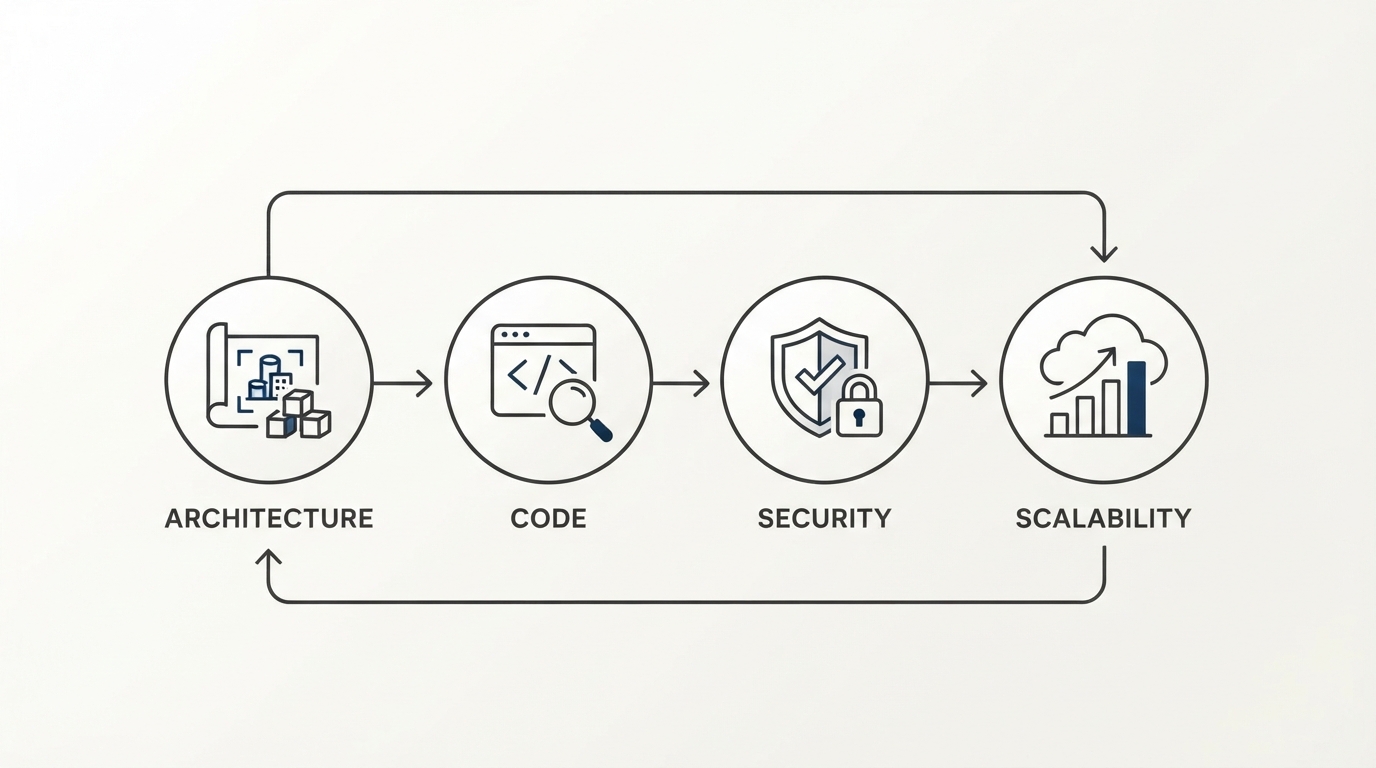
Why Is Technical Due Diligence Critical for SaaS Acquisitions?
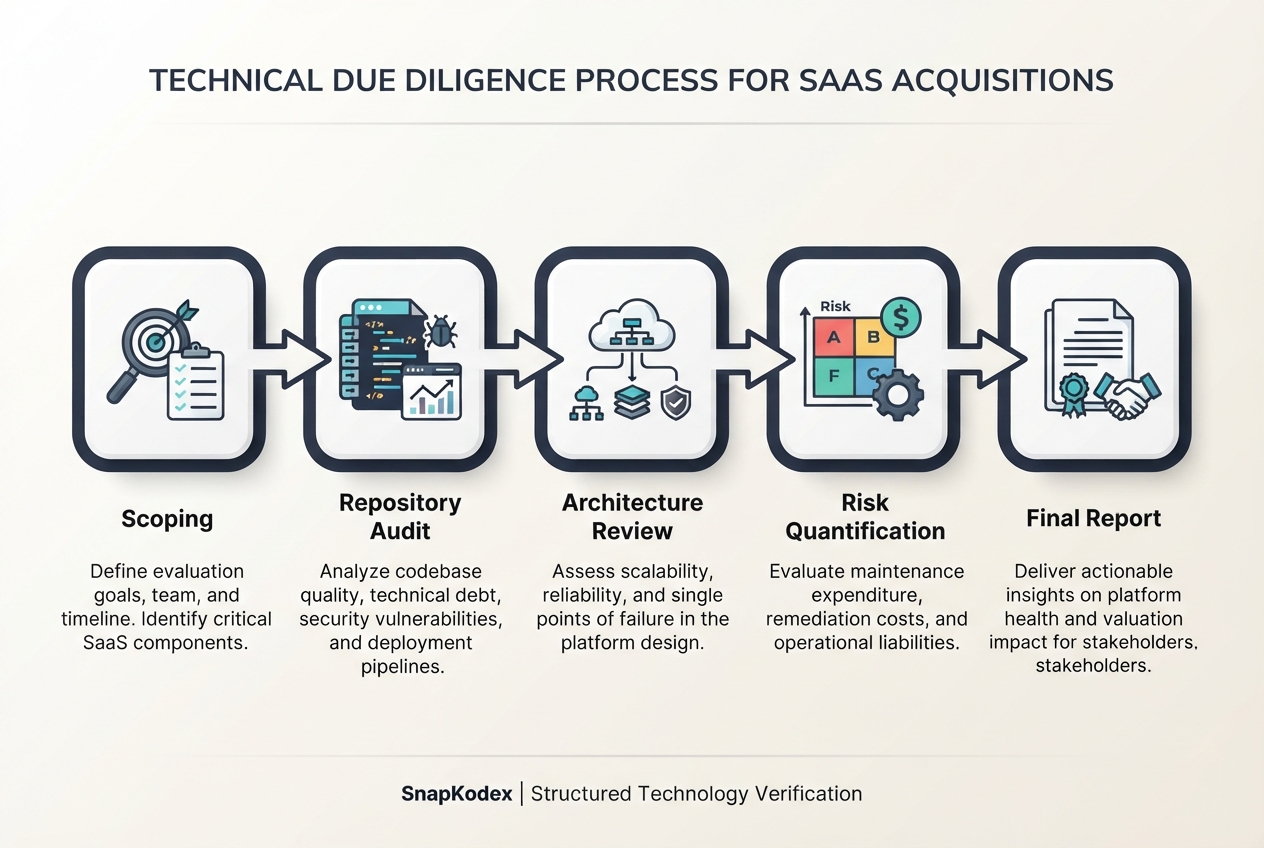
Acquiring or investing in a Software-as-a-Service business without rigorous technical verification exposes capital to severe operational liabilities. Surface metrics such as monthly recurring revenue, net revenue retention, and gross margins frequently conceal structural rot inside application codebases and deployment pipelines. Technical due diligence establishes whether an existing software asset can reliably support planned customer expansion without requiring a costly total rewrite. Evaluators analyze the entire software delivery lifecycle to uncover architectural debt, undocumented manual interventions, and single points of operational failure before commercial commitments become binding.
Strategic buyers conduct structured technical investigations to determine the true maintenance expenditure and engineering capital required to scale target platforms. Unearthing structural deficiencies early provides essential negotiation leverage, enabling deal leads to adjust purchase prices, request specific indemnity escrows, or mandate pre-closing remediation sprints. Software teams establishing systematic evaluation standards often consult foundational technology roadmaps on SnapKodex home to benchmark operational maturity and manage platform complexity effectively. Rigorous inspection transforms assumptions regarding developer productivity into measurable facts backed by architectural evidence.
- Prevents unforeseen post-acquisition capital expenditure by identifying mandatory code refactoring upfront.
- Protects company valuation by quantifying hidden operational risks and dependency vulnerabilities.
- Ensures cloud infrastructure unit economics remain sustainable under rapid transaction expansion.
- Identifies critical single points of failure across internal databases, message queues, and external APIs.
Establishing the Post-LOI Evaluation Timeline
Formal technical due diligence typically unfolds during the forty-five to ninety day window following the execution of a Letter of Intent. This constrained timeline requires disciplined coordination between technical evaluators, legal counsel, and the target engineering leadership. An effective evaluation begins with an exhaustive information request list covering architecture diagrams, infrastructure billing accounts, continuous integration configurations, and third-party dependency inventories. Establishing unambiguous expectations early ensures sellers prepare necessary engineering artifacts without stalling momentum.
Because engineering leaders must balance audit requests against ongoing customer commitments, evaluators prioritize revenue-critical components first. Early focus centers on core data stores, billing processing engines, and tenant isolation models. Systematically reviewing these high-leverage domains allows technical teams to flag deal-breaking liabilities early, ensuring that leadership can address material concerns well before final closing documents are drafted.
Balancing Code-Free Analysis and Repository Deep Dives
Deal participants often debate the necessity of direct source-code access versus high-level code-free telemetry audits. Code-free analyses evaluate system runtimes, cloud configuration dashboards, uptime monitors, and developer interview answers. This approach provides valuable perspective on team maturity while safeguarding seller intellectual property before purchase contracts are final. However, relying exclusively on observational telemetry risks missing critical vulnerabilities embedded deep within application logic.
A thorough acquisition audit demands direct inspection of representative source repositories, software bills of materials, and automated test pipelines. Hands-on code reviews unmask fragile business logic, hardcoded authorization tokens, unpinned package versions, and incomplete test assertions that observational dashboards cannot capture. Combining high-level infrastructure telemetry with focused repository reviews delivers the empirical clarity required to underwrite high-value software transactions safely.
How Do You Evaluate Architecture and Scalability?
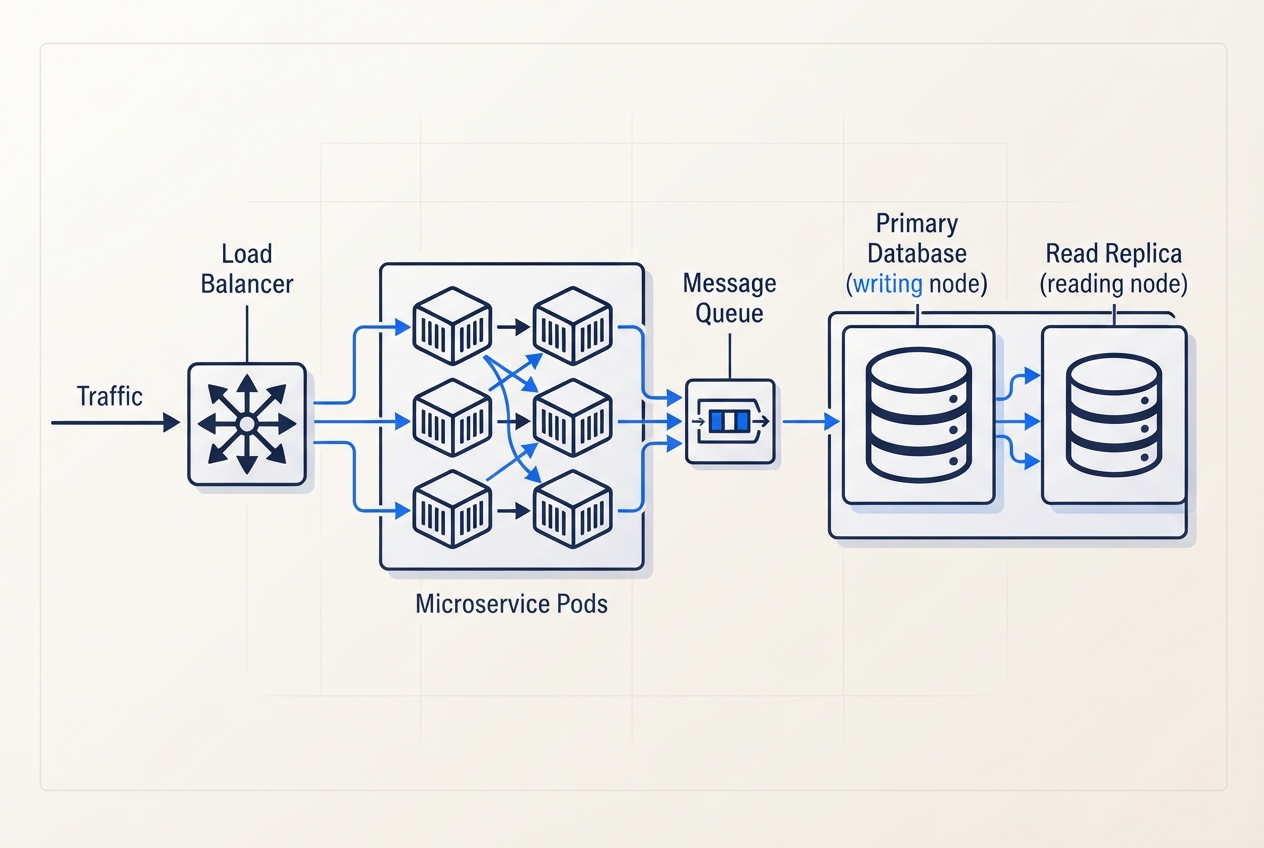
A SaaS platform's architectural blueprint determines whether it can absorb enterprise traffic spikes without suffering degrading latency or catastrophic downtime. Evaluators must verify documented architectural diagrams against actual runtime configurations across production cloud clusters. Rushed early-stage development frequently leads to discrepancies between high-level architectural proposals and the sprawling, undocumented implementations operating in live environments. Discrepancies often reveal emergency shortcuts that compromise operational resiliency and system modularity.
Assessing horizontal versus vertical scalability requirements allows acquirers to forecast future infrastructure costs accurately. Monolithic applications that rely entirely on vertical server scaling eventually encounter physical compute limits and exorbitant hosting charges. Conversely, evaluating platforms through specialized engineering reviews such as SnapKodex services helps stakeholders confirm whether decoupled microservices, asynchronous message brokers, and distributed data stores operate efficiently without generating excessive distributed-system maintenance overhead.
- Verify documented data flows and microservice network topologies against actual production cloud infrastructure.
- Examine database read and write partitioning, caching layers, and asynchronous background worker queues.
- Evaluate multi-tenant isolation mechanisms to prevent cross-customer data leakage and resource contention.
- Confirm automated container orchestration, auto-scaling policies, and multi-zone failover capabilities.
Analyzing Cloud Unit Economics and Margin Health
Scalability is an economic discipline as much as a technical standard. Evaluators must calculate cloud infrastructure cost per active user, per tenant, and per processed transaction to understand how system load impacts gross operating margins. Over-engineered applications with uncontrolled container clusters, unpruned object storage buckets, and redundant third-party SaaS integrations rapidly erode profitability as sales volume climbs.
Audit teams cross-reference hosting invoices from cloud providers with internal transaction telemetry to isolate operational cost drivers. Identifying memory-intensive background routines, inefficient database queries, or runaway vector search indices empowers buyers to budget targeted optimization sprints immediately post-acquisition. Sustainable cloud unit economics ensure that incremental top-line revenue translates directly into healthy enterprise profitability.
Identifying Single Points of Failure and Architectural Debt
Every inherited architecture contains hidden dependencies that jeopardize business continuity if left unmitigated. Evaluators inspect database topologies to confirm whether production systems rely on single, un-replicated database instances without automated failover capabilities. Similarly, critical workflows dependent on synchronous calls to fragile external APIs present substantial availability risks during third-party outages.
Architectural debt manifests when past technical shortcuts prevent core system modifications. Inspecting message queue durability, disaster recovery plans, and recovery point objectives clarifies how resilient the platform remains under severe operational stress. Uncovering these architectural choke points allows investment committees to factor necessary infrastructure modernization directly into post-acquisition integration budgets.
What Metrics Reveal True Code Quality and CI/CD Pipeline Health?
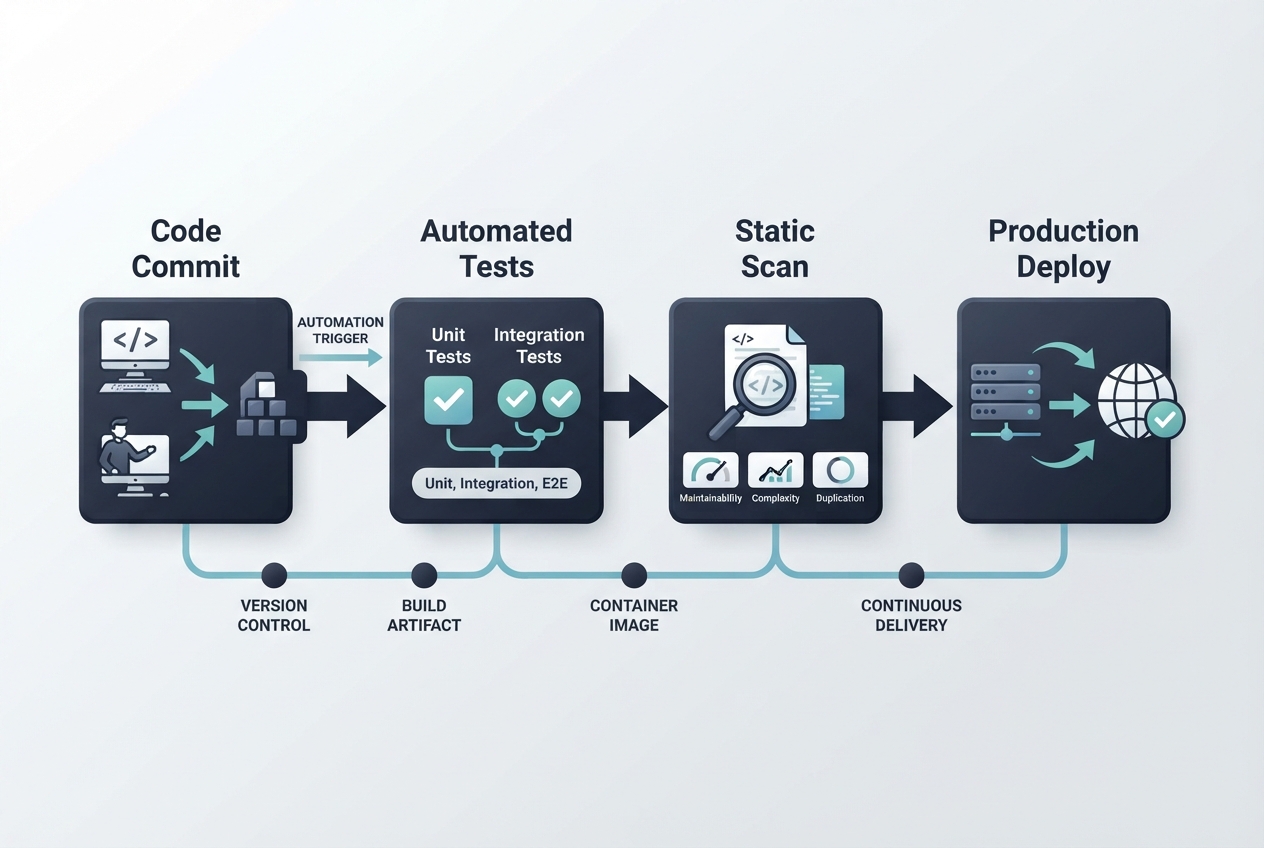
Inheriting an unfamiliar codebase means inheriting the collective conventions, test habits, and technical debt of past developers. Code quality dictates how quickly an engineering team can introduce new product capabilities without breaking existing production functionality. Evaluators assess automated test coverage across high-risk modules, ensuring that checkout flows, tenant onboarding, and data persistence layers maintain comprehensive unit and integration test assertions. Repositories devoid of automated tests inevitably suffer from slow, fearful deployment cycles.
Delivery pipeline hygiene serves as a reliable proxy for overall engineering maturity and team discipline. Modern software organizations rely on fully reproducible continuous integration and continuous deployment pipelines that validate, build, and deploy container images automatically. Comparing deployment workflows against standard digital growth playbooks such as https://snapkodex.com/blog/ai-marketing-guide reveals whether an organization maintains the agility needed to support rapid modern go-to-market strategies.
- Measure automated unit, integration, and end-to-end test coverage across revenue-critical user workflows.
- Verify that deployment scripts execute deterministically without manual interventions on developer machines.
- Evaluate developer onboarding velocity by measuring the time required for a new engineer to deploy code safely.
- Review static code analysis metrics to monitor code maintainability indices, cyclomatic complexity, and duplication.
Onboarding Velocity and Developer Experience Diagnostics
A practical diagnostic for measuring code maintainability is evaluating onboarding velocity. Evaluators inquire how many days a newly hired software engineer requires to configure a local development environment, execute test suites, and ship an authorized code patch into production. If local setup requires tribal knowledge, undocumented environment variables, and days of troubleshooting, overall developer velocity across the organization is deeply compromised.
Standardized containerized environments, comprehensive documentation, and automated seed scripts indicate mature development processes. High developer friction translates directly into inflated payroll overhead and elevated engineering turnover. Identifying these operational barriers equips buyers to schedule immediate developer tooling upgrades post-acquisition.
How Should You Audit Security Posture and Open-Source Compliance?
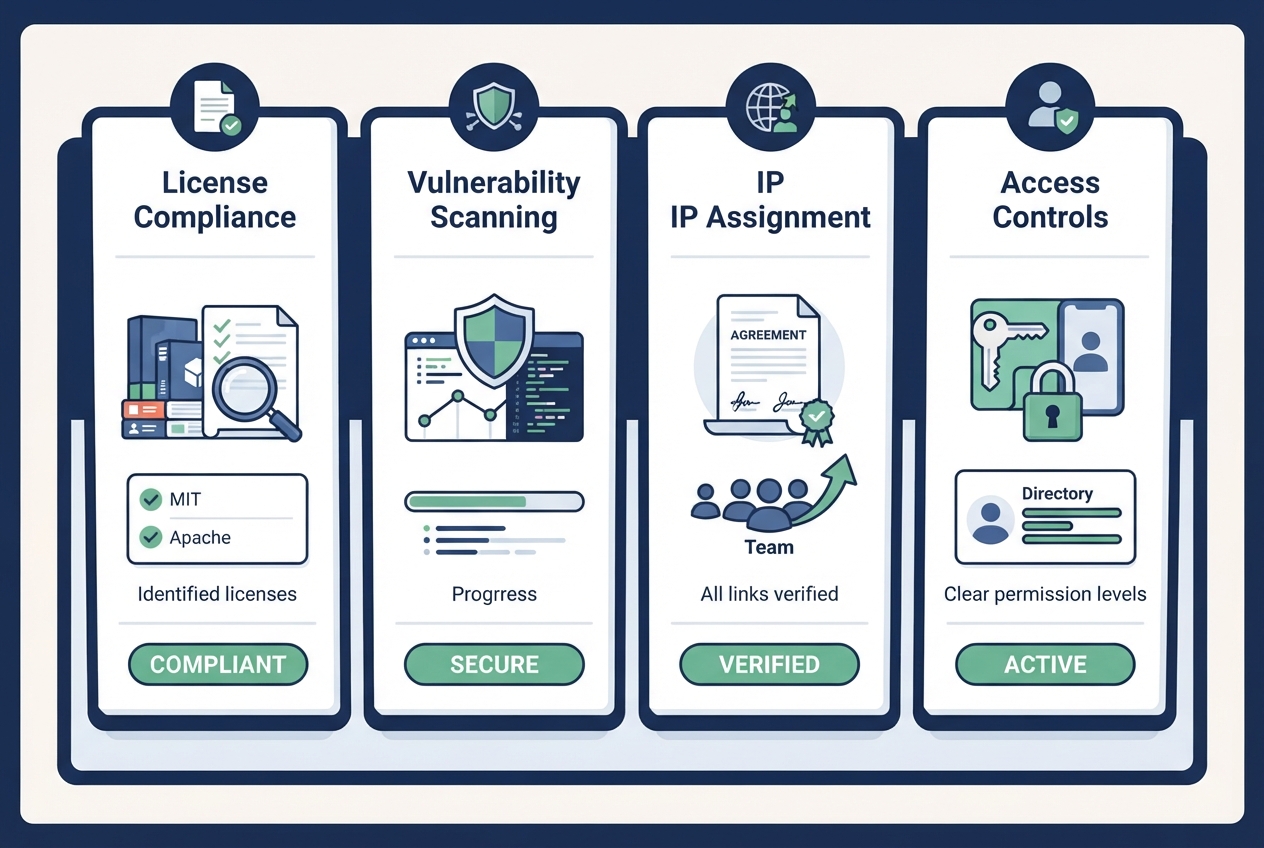
Security liabilities and intellectual property infringements represent catastrophic risks in SaaS acquisitions. Evaluators must benchmark internal security controls against established industry frameworks, such as the NIST Secure Software Development Framework, SOC 2 Type II controls, and ISO 27001 standards. Auditing static application security testing logs, dependency scans, and third-party penetration test reports exposes unpatched Common Vulnerabilities and Exposures before purchase capital changes hands.
Intellectual property hygiene demands equal rigor. Software composition analysis scans are mandatory to identify strict copyleft licenses, such as GPL or AGPL, that may legally compromise proprietary software ownership. When technical writing and operational frameworks require alignment across enterprise assets, reviewing specialized resources like https://snapkodex.com/services/seo-content helps teams document procedural compliance accurately. Inquiries regarding custom technical due diligence frameworks can be directed to Contact SnapKodex to establish tailored evaluation procedures.
- Execute automated software composition analysis to detect unmanaged third-party vulnerabilities and copyleft licenses.
- Verify that all current and former engineering contributors have executed binding invention assignment agreements.
- Confirm tenant data encryption protocols across active transit channels and persistent storage volumes.
- Review role-based access control policies, multi-factor authentication mandates, and audit logging capabilities.
Software Composition Analysis and Copyleft Licensing
Modern SaaS products rely extensively on open-source libraries and external software packages. While open-source components accelerate development cycles, unmanaged dependencies introduce severe operational vulnerabilities and legal risks. Static analysis tools generate software composition analysis reports that categorize external libraries according to their legal licensing models.
Permissive licenses like MIT, Apache 2.0, and BSD pose minimal legal friction for commercial software buyers. In contrast, viral copyleft licenses can mandate that proprietary source code incorporating those libraries be publicly disclosed under reciprocal distribution clauses. Identifying copyleft contamination allows legal and technical advisors to mandate dependency replacement or code refactoring prior to closing transaction agreements.
PIIA Assignment Chains and Key-Person Technical Dependency
A technical audit must confirm that the selling entity legally owns every line of proprietary source code. Legal and technical auditors inspect signed Proprietary Information and Inventions Agreements for every historical employee, contractor, and third-party agency. Missing assignment documentation breaks the chain of title, leaving the buyer exposed to future copyright disputes or extortionate ownership claims from former contributors.
Simultaneously, evaluators assess key-person technical risk by mapping commit frequencies, system ownership, and architectural knowledge across the team. Codebases where a single lead developer holds exclusive knowledge of core modules present acute continuity risks. Ensuring that critical architectural insight is systematically documented protects the business against sudden departures during post-acquisition integration.
Technical Due Diligence Risk Severity and Deal Impact Matrix
Categorizing technical findings into standardized severity tiers enables deal teams to negotiate appropriate valuation adjustments, indemnity terms, and post-closing integration plans.
| Severity Tier | Typical Findings | Deal Impact & Recommended Action |
|---|---|---|
| Critical | Severe unpatched CVEs, zero tests on payment paths, copyleft GPL contamination, unassigned IP | Mandates purchase price reduction, specific escrow holdbacks, or mandatory pre-closing remediation. |
| Major | Manual deployment scripts, undocumented dependencies, runaway cloud unit costs, key-person risk | Informs post-close integration budgets, engineering hiring plans, and transition service agreements. |
| Minor | Inconsistent code styling, outdated internal wiki pages, incomplete non-core UI test assertions | Logged in post-acquisition engineering backlogs for standard iterative refactoring during regular sprints. |
Frequently asked questions
When should technical due diligence begin in a SaaS acquisition?
Technical due diligence typically launches immediately after signing a Letter of Intent during the formal forty-five to ninety day diligence window. Strategic buyers frequently initiate preliminary, code-free architectural evaluations prior to signing an LOI to establish accurate valuation boundaries.
What are the most common red flags found during SaaS technical due diligence?
The most severe red flags include absent automated test coverage across billing and database layers, manual deployments tied to individual developer laptops, viral copyleft software license contamination, and missing intellectual property assignment agreements from former engineers.
How does cloud infrastructure unit economics affect SaaS valuations?
Cloud unit economics determine whether gross margins can withstand rapid customer onboarding. Over-engineered or resource-inefficient platforms experience margin compression as transaction volumes grow, forcing buyers to discount valuations to account for mandatory infrastructure refactoring.
What is the difference between code-free analysis and repository inspection?
Code-free analysis evaluates system telemetry, uptime monitors, architecture diagrams, and leadership interviews without inspecting raw repositories. Repository inspections involve direct static code analysis, software composition scanning, and manual reviews of application business logic.
Why is key-person dependency a primary technical risk?
If core system architecture, tribal deployment knowledge, and infrastructure secrets reside with a single engineer, their departure post-acquisition can paralyze development velocity and jeopardize system stability during critical operational outages.